
Last updated November 4, 2026
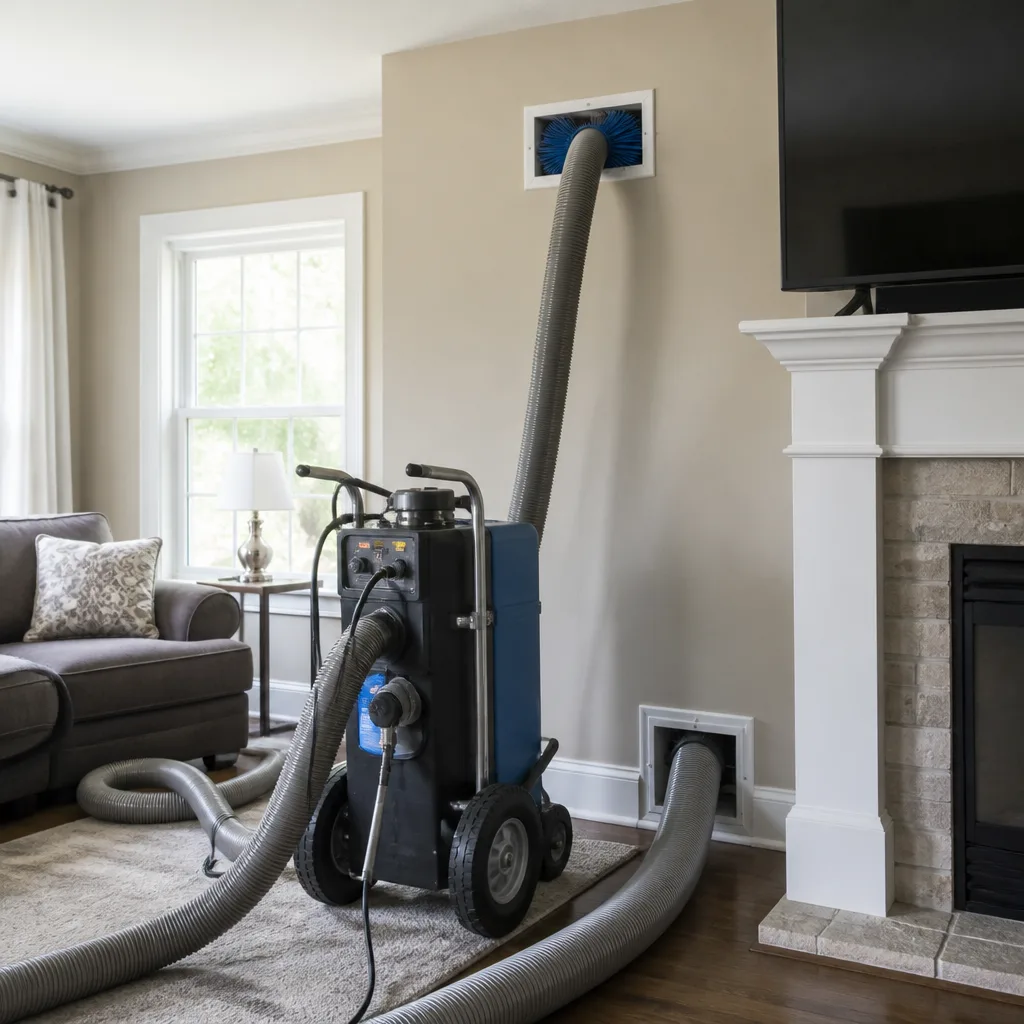 Whole-home duct cleaning
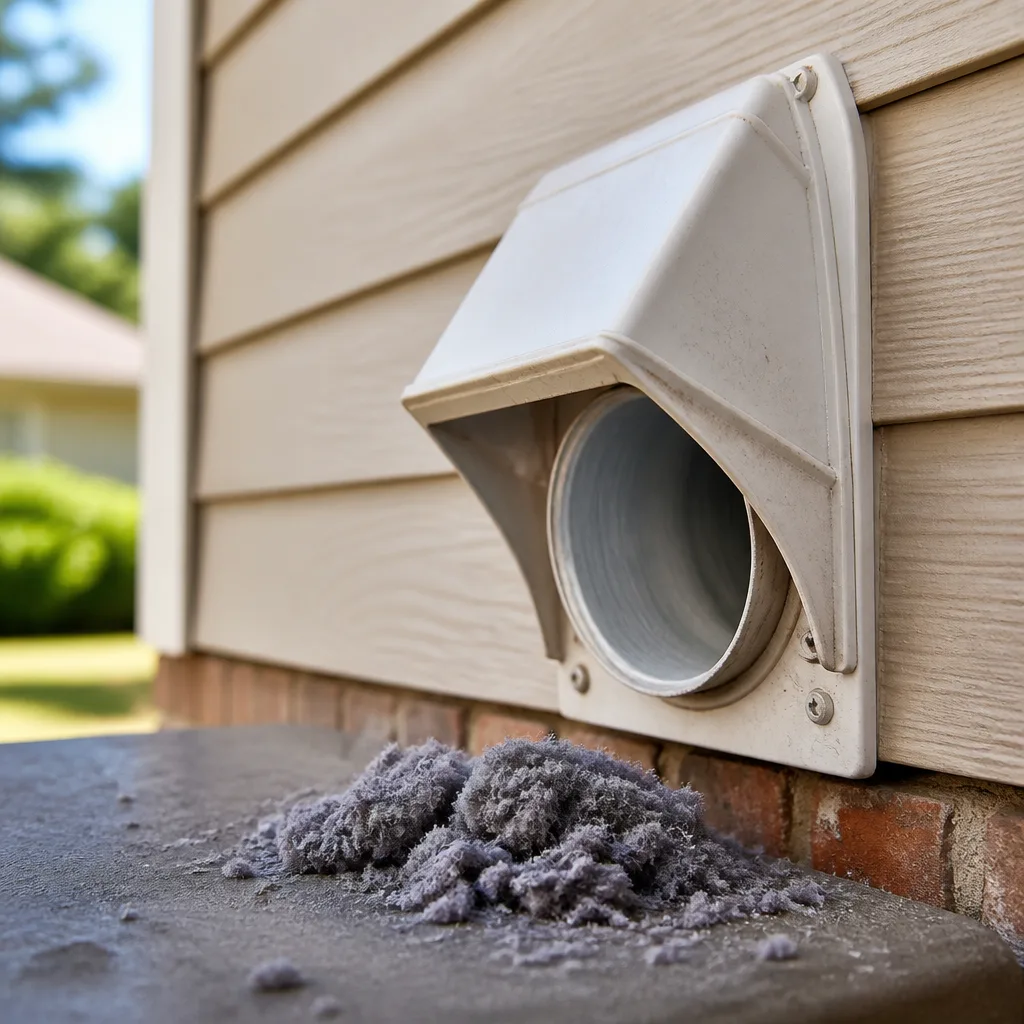 Dryer vent cleaning
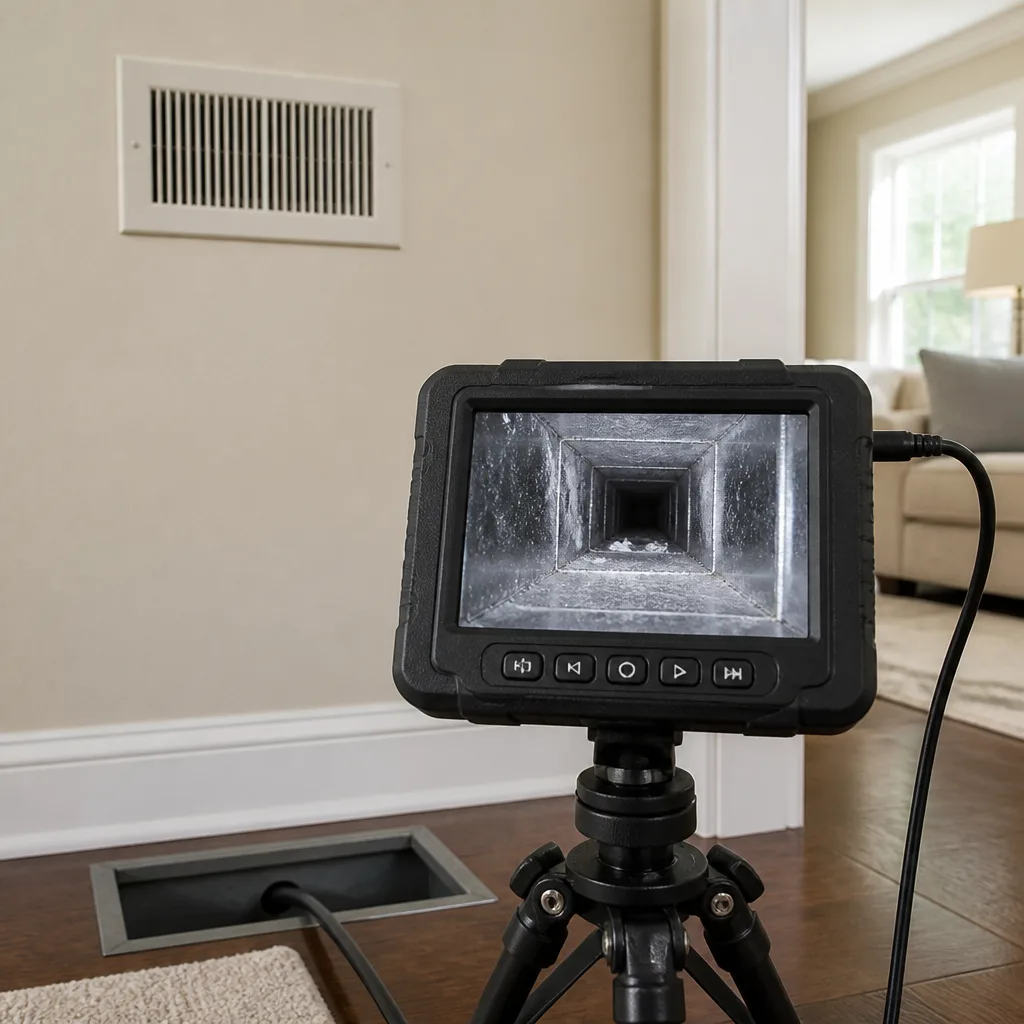 Camera inspection
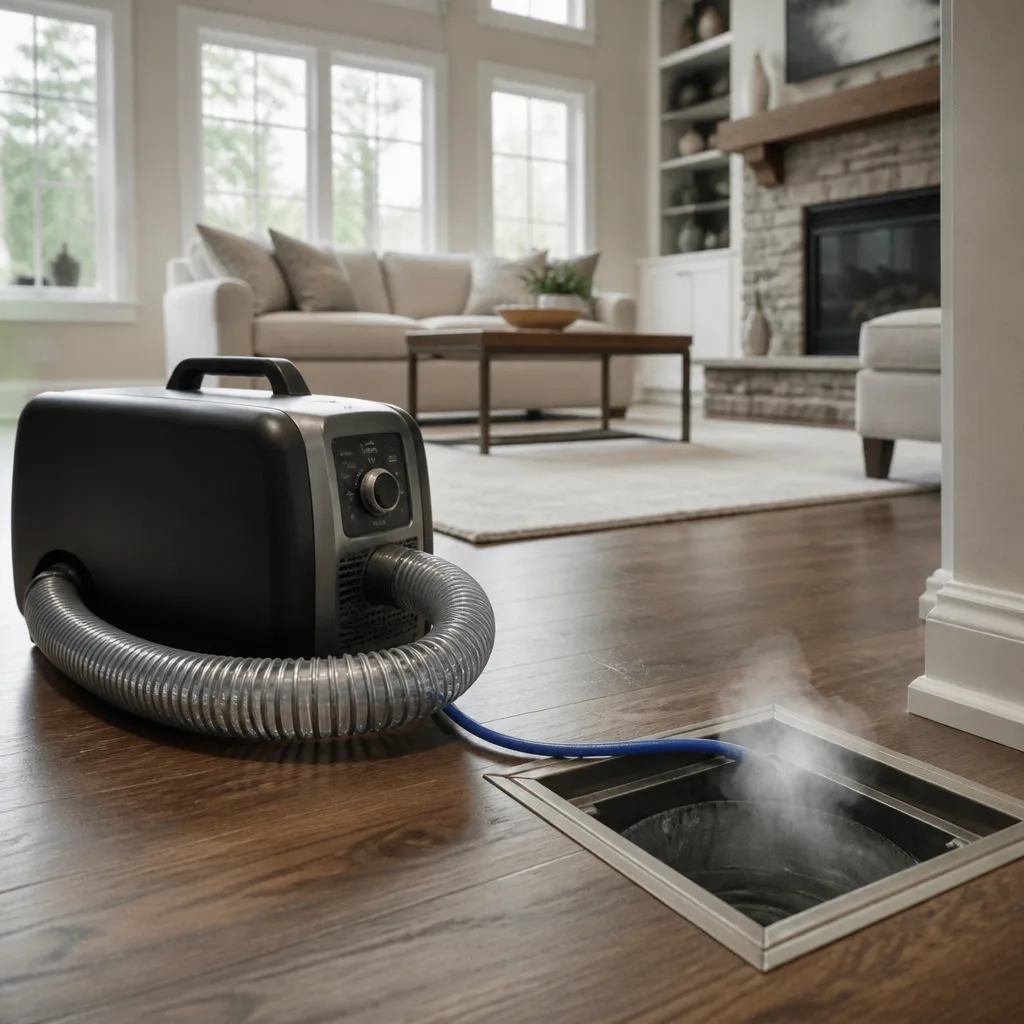 Sanitizing & deodorizing
Whole-system duct and dryer vent check with before-and-after photos - you see exactly what came out of your vents
That "$99 whole-house special" is a bait ad - the real number appears once they are in your hallway, or the "clean" is a shop-vac at the register. We photograph the inside of your ducts before and after instead.
Air Duct Cleaning Troubleshooting in Fountain Valley: Common Problems and How to Fix Them
If your vents smell musty only when the AC kicks on but not during heating, the problem almost certainly isn’t your ducts. It’s your evaporator coil, and cleaning the ducts without addressing it changes nothing. Most homeowners in Fountain Valley call us after weeks of trying to fix the wrong layer of the system. This guide maps the specific symptoms you’re seeing to the specific mechanical causes behind them, so you can stop guessing and spend money on the repair that actually resolves the issue.
Quick Answer
Most duct problems in Fountain Valley fall into four categories: contamination inside the ducts, coil or filter issues that mimic duct problems, leaks in the ductwork itself, and airflow design limitations. Start by checking your filter and registers, then trace the symptom to its mechanical source before paying for any service. If the issue is contamination, professional negative-pressure extraction with Rotobrush or Nikro equipment resolves it. If it’s leakage or coil buildup, cleaning alone will not fix what you’re experiencing.
Styles & brands we work with
- Whole-home duct cleaning
- Dryer vent cleaning
- Camera inspection
- Sanitizing & deodorizing
Table of Contents
- Symptom-to-Cause Mapping: What’s Actually Wrong
- Musty Odor That Only Appears With Cooling
- Dusty Surfaces After a Recent Cleaning
- Uneven Room Pressure and Weak Airflow
- Mold vs. Settled Debris vs. Pest Intrusion in Fountain Valley Homes
- What You Can Check Yourself Before Calling Anyone
- When Cleaning Isn’t Enough: Duct Leakage and Repair
- Common Mistakes to Avoid
Symptom-to-Cause Mapping: What’s Actually Wrong
Three different mechanical failures produce nearly identical symptoms at the register. Duct contamination, evaporator coil buildup, and return-side duct leakage all create the same experience: weak airflow, more dust on furniture, and a stale smell when the system runs. The fixes are completely different, and applying the wrong one is expensive. A homeowner who cleans their ducts to address a leaking return plenum gets no improvement. A homeowner who replaces their filter to address coil mold gets no improvement either. Understanding which layer of the system is failing is the entire game in Fountain Valley homes, where slab construction and compact mechanical closets make access tight and misdiagnosis common.
Here’s what we look for, in the order that eliminates the cheap fixes first:
- Coil issues present as odor that appears only in cooling mode, never in heating. The coil gets wet during cooling cycles, and whatever has accumulated on it becomes humid and odorous. In heating mode, the coil is dry and the smell disappears. This is the single most misdiagnosed symptom in our service area.
- Filter bypass presents as dust that accumulates evenly across every room, along with visible dust buildup on the blower cabinet itself. Air is slipping around the filter and carrying unfiltered particulate through the system. The fix is sealing the filter rack, not replacing the filter with a more restrictive one.
- Duct contamination presents as dust that’s worse in some rooms than others, often with visible debris inside the register openings. The contamination is physical, located in specific sections of ductwork, and requires mechanical extraction to remove.
- Duct leakage presents as rooms that never reach temperature, alongside unexplained humidity swings. The conditioned air is escaping into wall cavities or the attic before it reaches the register. Leakage is a repair issue, not a cleaning issue.
The reason so many Fountain Valley homeowners waste money on the wrong fix is that all four of these problems produce a vague mix of “more dust, weaker airflow, slightly off smell.” The differentiation comes from paying attention to when the symptom appears and where it’s concentrated. Those two observations narrow the diagnosis more than anything else.
Musty Odor That Only Appears With Cooling
If the smell arrives only when the AC runs and disappears during heating, you’re smelling the evaporator coil, not the ducts. This distinction matters because duct cleaning does not address coil contamination. The coil sits inside the air handler, downstream of the filter in most residential systems. Over years of cooling cycles, fine dust and skin cells that pass through even a good filter become wet, then dry, then wet again on the coil surface. That repeated wetting is what releases the odor. In air duct cleaning, we extract what’s inside the ductwork itself. A coil needs separate attention from a technician who can access the air handler.
The reason this problem is so prevalent in Fountain Valley is the cooling season. Homes here run air conditioning for most of the year, which means the coil never gets a long dry rest period the way it might in a cooler climate. The coil stays damp, stays warm, and stays biologically active essentially year-round. That’s also why the smell becomes more noticeable in fall, when outside temperatures drop and the system cycles less frequently, allowing odors to concentrate between cycles.
What you can do before calling anyone:
- Run the system in fan-only mode for 20 minutes with the cooling off. If the smell fades, the coil is the source, because fan-only mode doesn’t wet the coil.
- Inspect the filter. A filter that’s visibly loaded with dark, damp-looking material has been passing or shedding particulate onto the coil for months.
- Look at the condensate drain line. A slow-draining pan keeps standing water near the coil, which intensifies any odor. Flushing the drain line is a homeowner-level task worth doing before scheduling service.
If the smell persists in fan-only mode, the contamination is more likely inside the return or supply ductwork, and that’s when professional extraction becomes the right call. But if the smell only appears with the compressor running, the ductwork may be perfectly clean and the coil is the problem.
Dusty Surfaces After a Recent Cleaning
A homeowner calls us three months after another company cleaned their ducts and says the dust came right back. That’s a common complaint in Fountain Valley, and it usually traces to one of three things: incomplete access points, skipped flex duct sections, or a return-side leak that was never identified. Duct cleaning only removes what the equipment can actually reach. If the previous contractor didn’t cut access into the main trunk line or the branch lines, large sections of ductwork simply weren’t touched. If the system has flex ducts connecting the trunk to the registers, those are frequently skipped because access is awkward. And if the return side is pulling unfiltered air from the attic through a disconnected joint, new dust enters the system as fast as it’s removed.
In our experience, homes in Fountain Valley that were built during the high-volume construction years often have original flex duct runs that are now 20 to 30 years old. The inner liner separates, the insulation breaks down, and the duct itself becomes a source of particulate. Cleaning old flex duct is often less effective than replacing it, which is why Wellington Air Duct Cleaning offers duct repair as a core service alongside cleaning. If the duct has failed structurally, no amount of vacuuming restores it.
How to tell whether the last cleaning fell short:
- Inspect a register in a room that’s already gotten dusty again. Shine a flashlight into the branch duct as far as you can see. If visible dust and debris are sitting within arm’s reach of the register boot, the duct wasn’t cleaned thoroughly.
- Check whether the filter is getting dirty faster than normal. A return leak pulls attic or wall-cavity air into the system before it reaches the filter, which means the filter loads up with large particulate quickly.
- Ask the previous company how many access points they cut and where. If they can’t answer, the cleaning was likely performed only through the register openings, which reaches a small fraction of the system.
Professional cleaning with Rotobrush or Nikro systems involves creating sealed access ports at strategic points along the trunk line and running mechanically driven agitation tools through the full length of the duct, not just the last few feet visible from each register. The difference in outcome is substantial.
Uneven Room Pressure and Weak Airflow
Some rooms in a Fountain Valley home never feel comfortable regardless of the thermostat setting. The cause is either an obstruction inside the duct, a damper that’s been adjusted wrong, or a design problem that was built into the original system. All three present as “this one room is always stuffy.” The fix for each is different, and identifying the correct one before calling a technician saves you from paying for work that doesn’t help.
Obstructions are the simplest to diagnose. Remove the register grille and look inside. A collapsed flex duct, a disconnected boot, or a physical blockage will be visible within the first few feet. We’ve found construction debris, disintegrated duct liner, and even pest nests inside branch lines. If you can see the blockage, the duct needs mechanical cleaning or repair. If the branch is clear but the room still gets weak airflow, the problem is likely a damper setting or the overall design of the system. Many homes in Fountain Valley have dampers installed at the trunk line where branches connect, intended to balance airflow. Over time, these dampers get moved during renovation work or simply left partially closed from a previous adjustment. A qualified technician can calibrate them.
If the damper is fully open and the branch is clear but airflow is still weak, the system itself may be undersized for the room, or the return path is insufficient. Rooms that are far from the air handler, rooms that were added on without extending the duct design, and rooms with large south-facing windows all fall into this category. These are performance limitations, not contamination issues. Cleaning won’t fix them. Duct repair or system modification will.
What you can do in ten minutes:
- Feel the airflow at the register in the problem room, then at the register in a comfortable room. If the difference is large, the branch line serving the problem room is restricted or closed.
- Check whether the return air path is open. If the problem room has a door that stays closed and no return in that room, the supply air has nowhere to go. Undercutting the door or adding a transfer grille often resolves the pressure imbalance.
- Compare the damper positions on the branch takeoffs if they’re visible in the attic or mechanical closet. If one is partially closed compared to the others, you’ve found the problem.
These checks take minutes and cost nothing. They also prevent you from scheduling a duct cleaning when the actual issue is a damper that needs to be opened.
Mold vs. Settled Debris vs. Pest Intrusion in Fountain Valley Homes
Not everything dark in a duct is mold. Most of what we see in Fountain Valley ductwork is settled household dust that has compacted over years into a dark, greasy film. It looks alarming, but it’s not biological growth. Distinguishing between mold, debris, and pest intrusion matters because the remediation approach differs for each, and treating debris as mold leads to unnecessary expense.
- Settled debris is uniform in color, typically gray-brown, and feels dry and gritty. It doesn’t smear when rubbed. It sits in a thin layer along the bottom of horizontal ducts and inside register boots. This is what dryer vent cleaning and duct cleaning both address mechanically.
- Mold in ductwork is almost always the result of sustained moisture. In Fountain Valley homes on slab foundations, the ductwork runs through the attic or the interstitial space between floors. Attic ducts are hot and dry most of the year. What creates the moisture is a condensate problem: a drain pan that overflows, a coil that blows moisture downstream, or a supply duct that sweats where it passes through an unconditioned space. Mold has a mottled, irregular appearance, often with a green, black, or white bloom, and it may smear when wiped. It also produces a persistent odor that doesn’t fade when the system cycles off.
- Pest intrusion leaves physical evidence: droppings, nesting material, chewed flex duct liner, or insect casings inside register boots. Rodents and roof rats are present in Fountain Valley, and they find attic ductwork an appealing shelter. The telltale sign is a rustling sound when the system is off, or debris that looks like shredded insulation appearing at a register.
If you see dark material in a register boot and you’re not sure what it is, take a photo and send it to a professional before you disturb it. Disturbing dried rodent droppings or mold without proper containment can release particles into the living space. A proper assessment tells you whether you’re dealing with ordinary dust that responds to cleaning, or a moisture or pest issue that requires a different response.
What You Can Check Yourself Before Calling Anyone
Some duct problems are diagnosable from the register opening. Some aren’t. Knowing where the boundary sits saves you a service call when the fix is simple, and prevents you from spending weeks on a problem that needs professional equipment. Here’s a structured sequence we walk homeowners through over the phone, in the order that’s most likely to find the problem quickly.
- Remove every register grille and look inside. Use a flashlight. Look for visible debris, disconnected boots, collapsed flex, or evidence of pests. Photograph anything that looks wrong.
- Check the filter. Pull it out and hold it up to a light. If the light doesn’t pass through, the filter has been restrictive for weeks and may have collapsed or been bypassed. Also look for gaps around the filter rack where unfiltered air could be pulled around the filter.
- Check the condensate drain. A slow-draining pan puts moisture into the system. Pour a cup of water into the drain line where it exits the air handler. If the water doesn’t flow away quickly, the line is clogged and needs flushing.
- Walk each room and compare airflow. The difference between a clean, clear branch line and an obstructed one is obvious when you compare registers side by side.
- Sniff at the return grille with the fan running, cooling off. If the odor is present in fan-only mode, the source is in the return side. If not, it’s the coil or supply side.
What you can’t assess from the register is the condition of the trunk line, the presence of leakage at the plenum connections, or the internal condition of flex duct runs that run through the attic. Those require access, tools, and experience. In our service area, attic access is often the limiting factor for a homeowner, and we’d rather have you call us to talk through what you’re seeing than risk a misdiagnosis.
Call (877) 358-4557. We answer 24/7. Fast dispatch from 7am to 7pm, Sunday through Friday.
When Cleaning Isn’t Enough: Duct Leakage and Repair
Leakage is invisible. It doesn’t smell. It doesn’t show up as debris in a register. What it does is rob the system of its ability to deliver air where the ductwork was designed to send it. A leaking return pulls attic air into the house, which is why the indoor humidity never quite matches what the AC is set to achieve, and why the filter gets dirty unusually fast. A leaking supply pushes conditioned air into the attic, which is why some rooms never get comfortable, and why the system runs longer than it should.
The joints where ducts connect to the plenum, the branch takeoffs, and the outer end of flex runs are the common leak points in Fountain Valley homes. The original foil tape and mastic applied during construction dries out, cracks, and separates. Rodents disturb it from the outside. Renovation work knocks connections loose. None of this is visible from the register opening. Identifying it requires an experienced eye and often a pressure test.
This is where the distinction between a cleaning company and a duct specialist becomes concrete. Wellington Air Duct Cleaning offers air duct repair because our technicians see the inside of systems every day. We find the damaged flex run, the separated boot, the failed tape joint, and we fix it. That’s not an add-on service for us, it’s the same job. Equipment like our Rotobrush and Nikro systems remove the contamination; the repair work restores the system’s mechanical function. A company that only vacuums sees the same duct and moves past the damage because fixing it isn’t in their scope. Built around the brands already in your home, whether that’s a Honeywell filter cabinet, an Aprilaire media filter, or a Guardsman UV system, our technicians work around what’s installed rather than treating every system as if it were the same.
If your rooms never reach temperature, if your filter is dark brown in three weeks, or if the humidity in the house feels heavy even with the AC running, you may have leakage rather than contamination. Cleaning addresses the latter. Repair addresses the former.
Common Mistakes to Avoid
- Assuming every smell is a dirty duct. Odor that only accompanies cooling is the coil, not the ductwork. Cleaning the ducts before addressing the coil wastes money and leaves the smell exactly where it was.
- Buying a more restrictive filter to fix dust. A higher MERV rating increases the pressure drop across the filter, which can starve the system for air and create new problems. The correct fix for dusty air is usually sealing the filter rack and cleaning the ducts, not choking the system with a denser media.
- Hiring based on the lowest per-vent price. Per-vent pricing encourages a technician to rush through the system and skip sections that are hard to reach. A whole-system price set by the written estimate, agreed before the work starts, creates accountability for the entire duct network.
- Skipping the dryer vent because the ducts were just cleaned. The dryer vent is a separate system with its own contamination profile and fire risk. Having the ducts cleaned does nothing for the dryer vent, and a blocked dryer vent is a documented fire hazard.
- Waiting until a room becomes unusable. Duct problems compound. A small leak becomes a larger one. A restricted branch becomes a fully closed one. Attending to uneven airflow early costs less than repairing a system that’s been running out of balance for years.
- Attempting to clean ducts with a shop vac. A shop vac reaches a few feet into the register boot and leaves the rest of the system untouched. It also risks damaging the boot or flex connection. Negative-pressure extraction with mechanically driven agitation is the method that actually removes the contamination.
When to Call a Professional
Call when the problem is beyond what a flashlight and a filter check can diagnose. If you’ve confirmed the filter is clean and the registers are clear but the odor persists, the dust returns within weeks, or the airflow imbalance remains, the issue is inside the system, and identifying it requires access to the trunk line, plenum, and branch runs. Duct leakage in particular cannot be diagnosed from the register. If you suspect contamination, repair, or simply want the system assessed by someone whose entire focus is what moves through your home’s air system, we can help. Wellington Air Duct Cleaning offers free estimates in Fountain Valley. Call (877) 358-4557. We answer 24/7. Fast dispatch from 7am to 7pm, Sunday through Friday.
See the difference
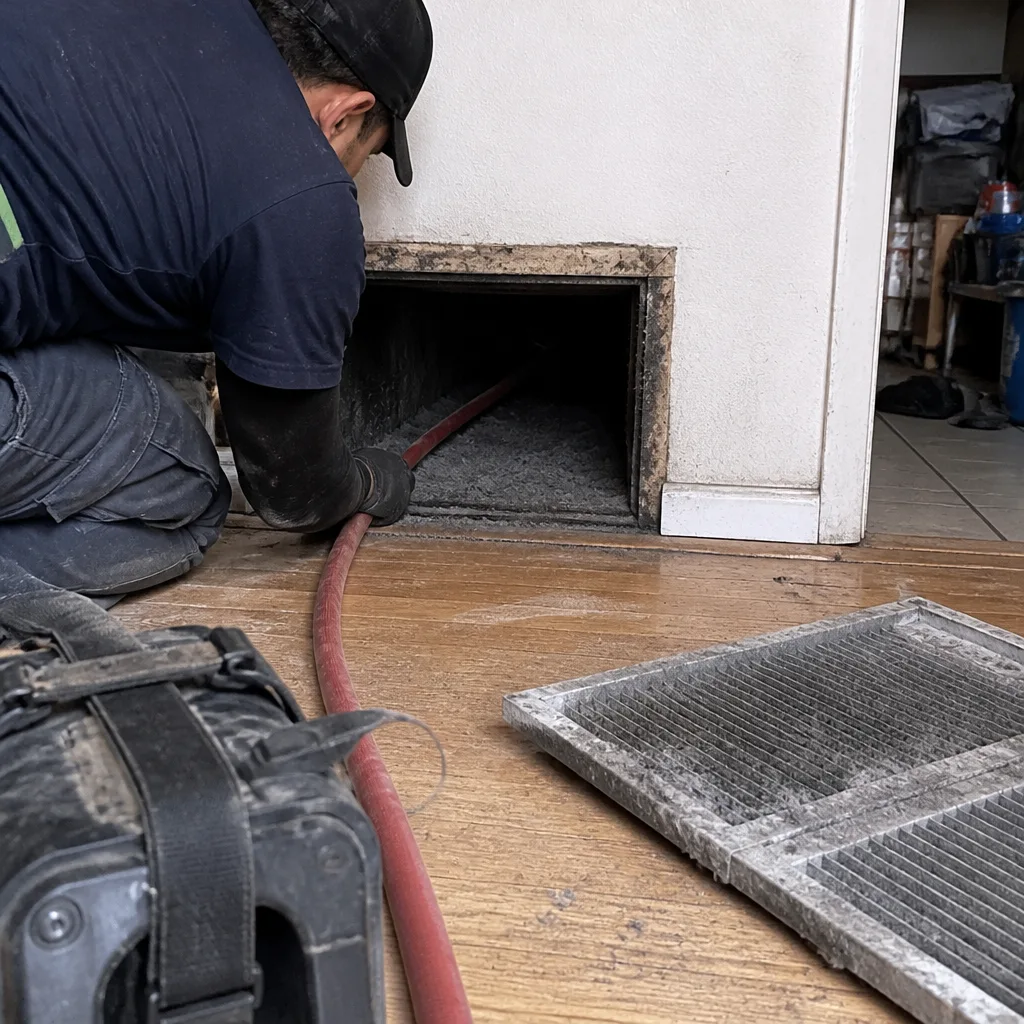 Before
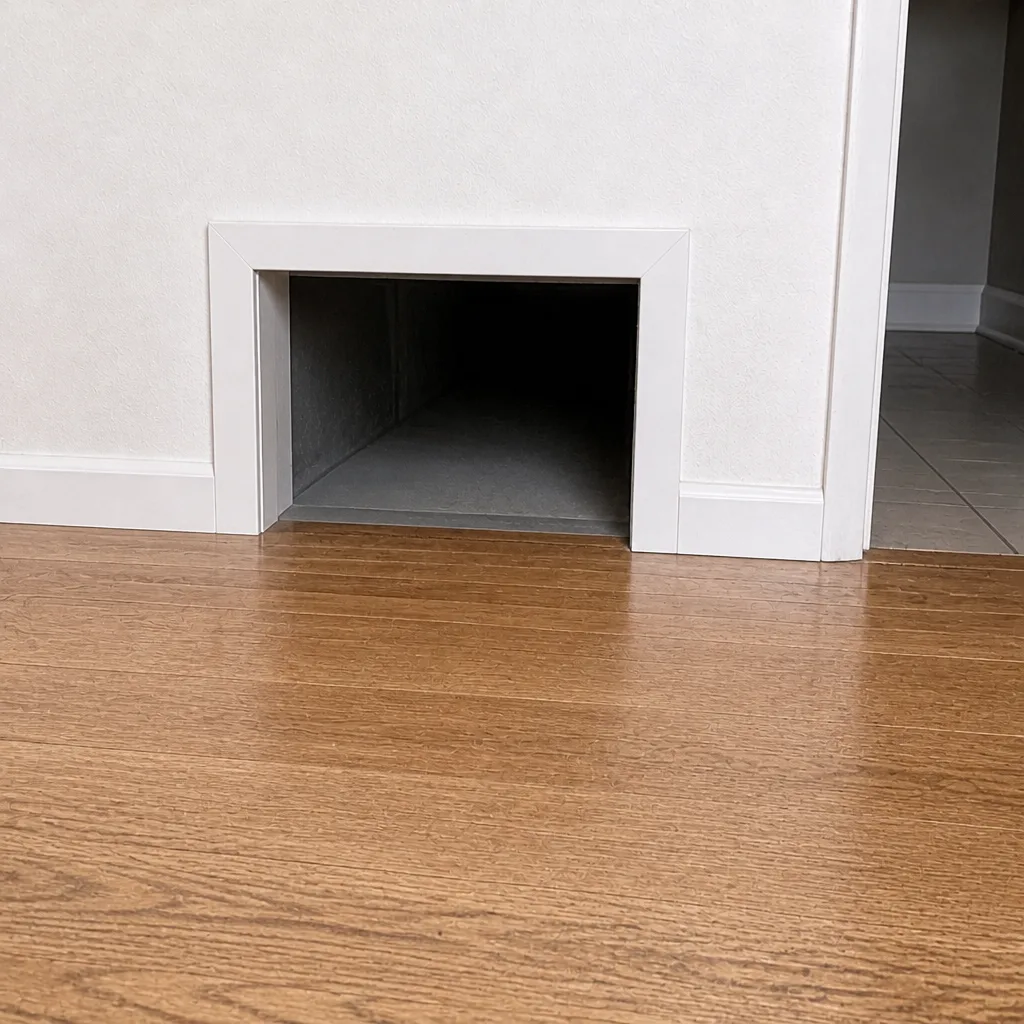 After
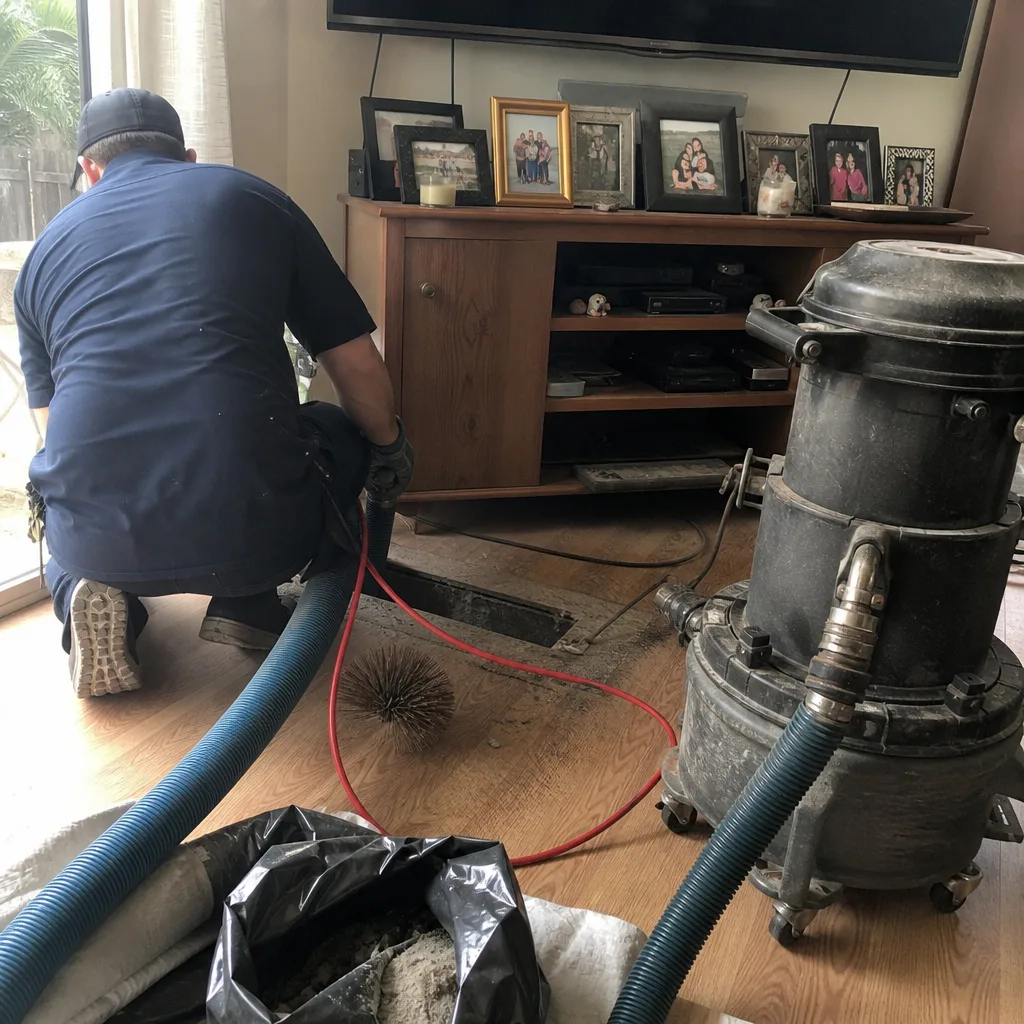 Before
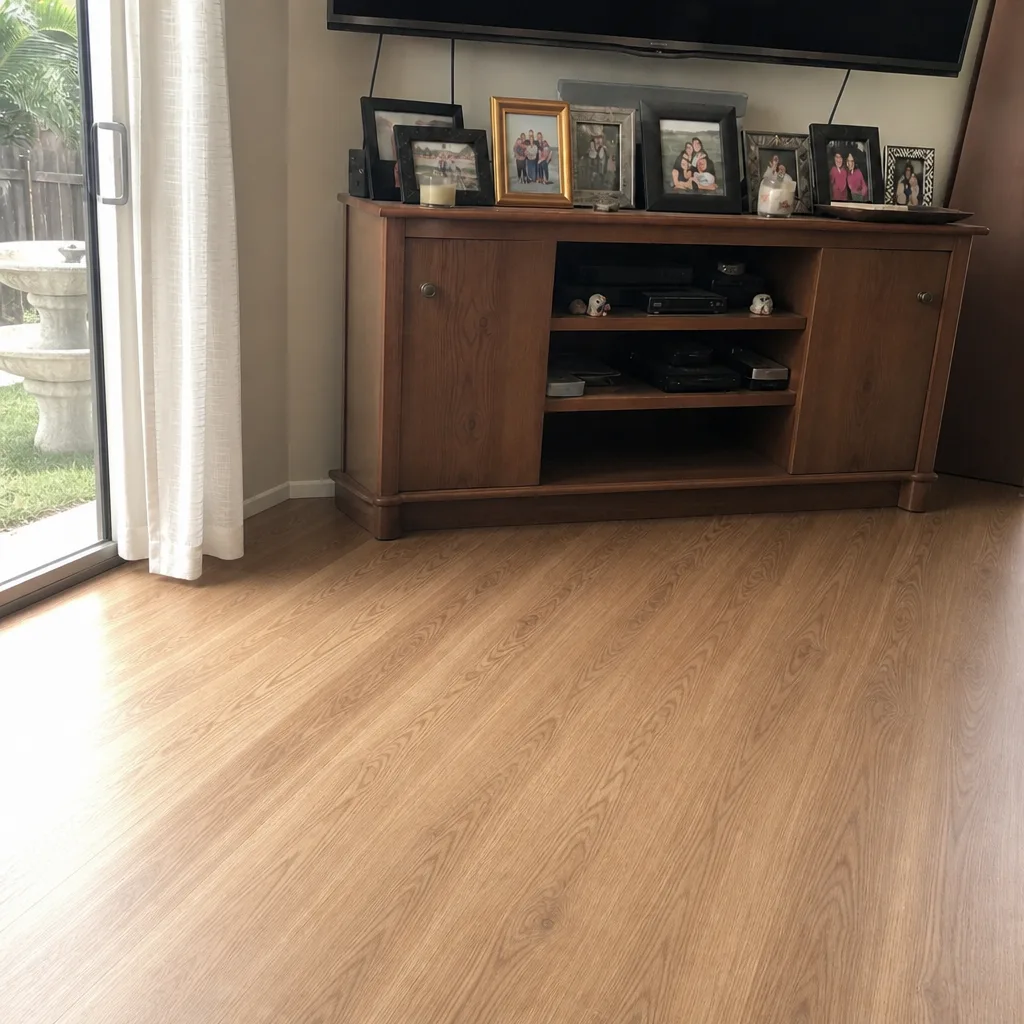 After
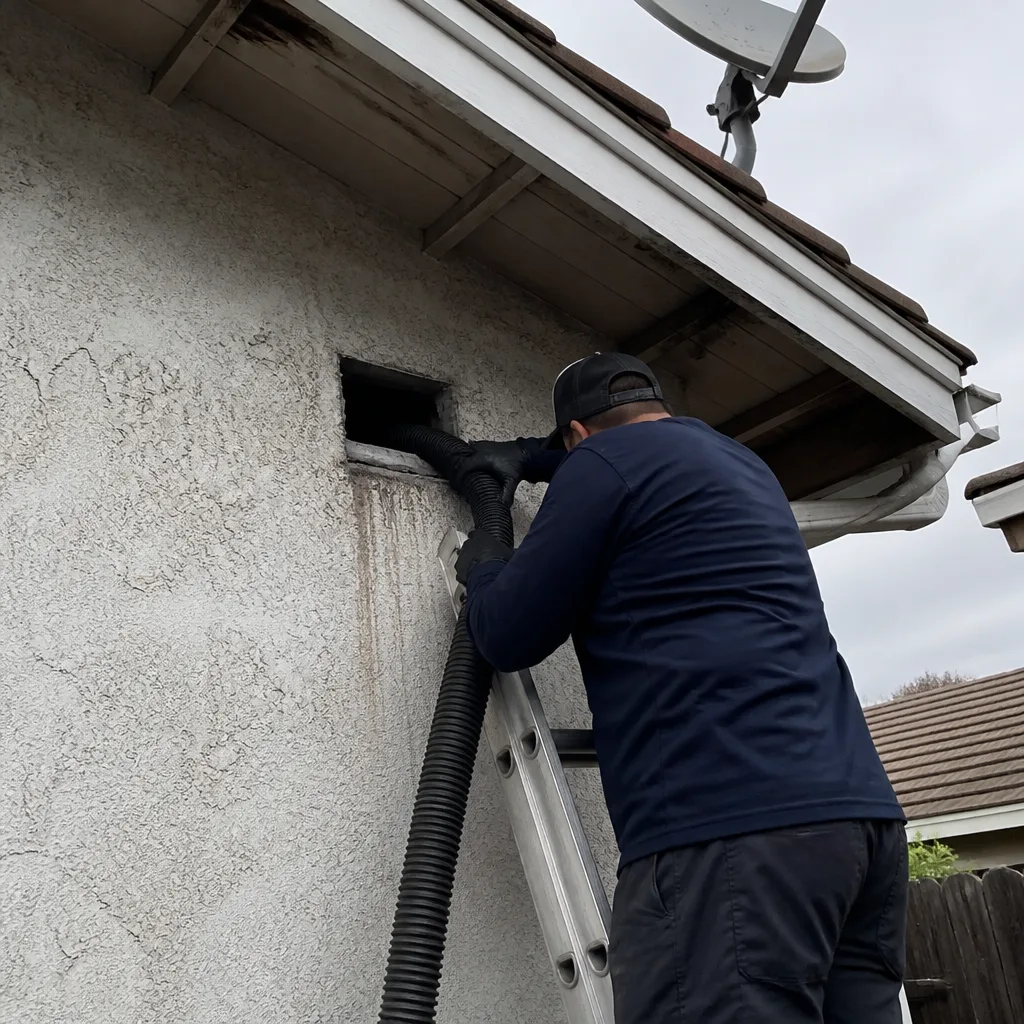 Before
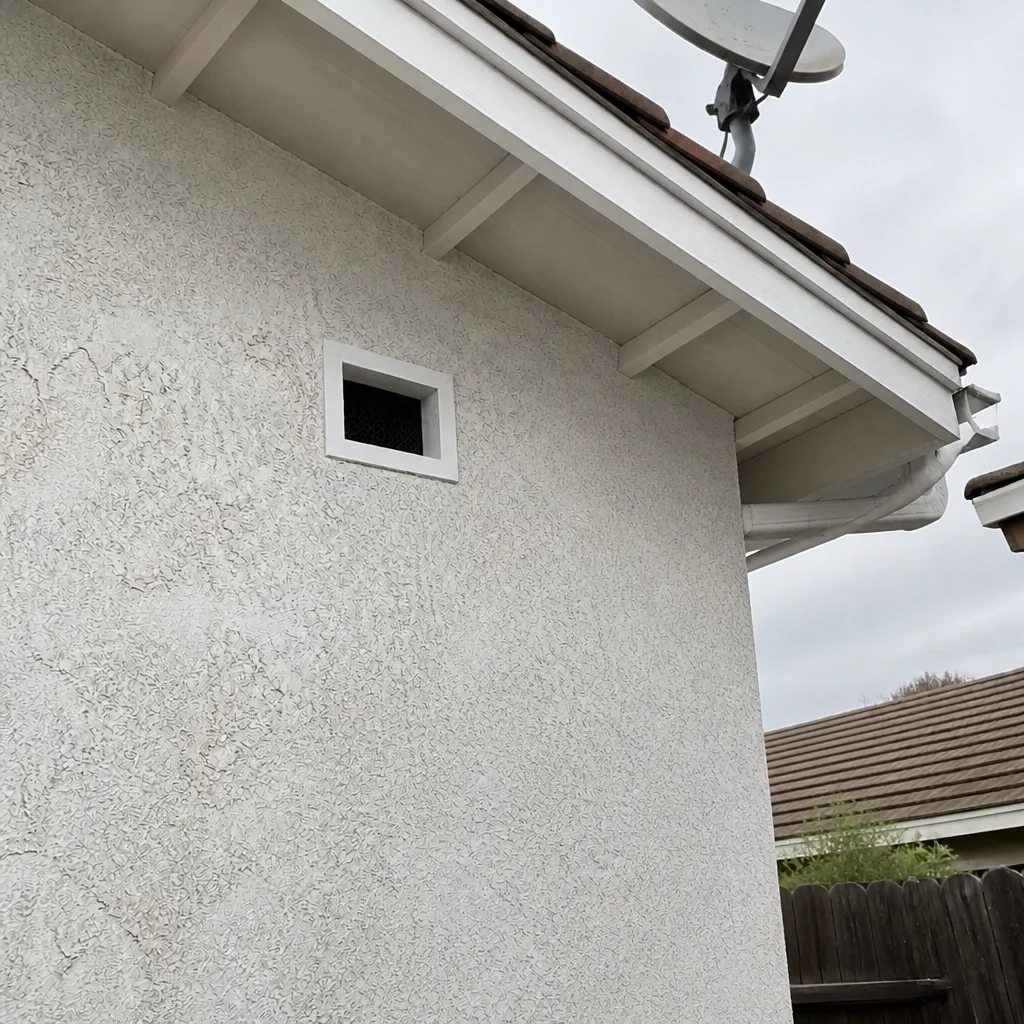 After
Frequently Asked Questions
Air duct cleaning in Fountain Valley is priced per job by written estimate, not per vent. Expect a whole-system cleaning to run higher than the coupon mailers advertise, because a complete job requires sealed access points, mechanically driven agitation, and full-length extraction. The estimate you receive before the work starts sets the final price. Call (877) 358-4557 for a free estimate. We answer 24/7.
Cheaper quotes typically cover fewer access points, shorter time in the system, and no repair work. Some companies advertise a low per-vent price and count only the vents they clean, leaving branch lines and trunk sections untouched. Others skip the dryer vent, skip access cutting, and move through the house in under an hour. You get what the equipment and time allow, and in duct cleaning, access is everything.
Ask for before-and-after photos of your own ducts from inside the access points. A professional job produces visual documentation of the same sections, showing what was removed. If a company can’t provide photos of your system, ask how they verified full-length extraction. Our technicians document the system as part of the job.
There’s no universal schedule that applies to every Fountain Valley home. A system that runs cooling most of the year, has pets, or sits in a neighborhood with ongoing construction may need attention every few years. A tightly sealed system with good filtration may go much longer. The right question isn’t “how many years since the last cleaning” but “what’s accumulating inside the system right now, and is it affecting performance.” An inspection answers that.
Duct contamination isn’t the primary driver of indoor allergy symptoms in most homes, but it can contribute. The more significant factors are filter effectiveness, return-side leakage pulling attic or wall-cavity air into the living space, and moisture on the coil or in the ductwork. If allergy symptoms are worse at home than elsewhere, the duct system is worth inspecting as part of the picture.
Yes. We provide air duct cleaning, dryer vent cleaning, and air duct repair throughout Fountain Valley. Our equipment is professional-grade, purpose-built for air duct systems, including Rotobrush and Nikro systems, and our technicians are trained to work around the brands already in your home. Call (877) 358-4557 for a free estimate.
The Bottom Line
Duct problems in Fountain Valley are rarely what they first appear to be. A smell that follows the cooling cycle is the coil. Dust that returns after a cleaning is a return leak or an untouched section of flex duct. A room that never gets comfortable is a damper, an obstruction, or a design limitation. The practical takeaway is to diagnose before you pay. Check the filter and registers yourself. Pay attention to when the symptom appears and where it’s concentrated. And when the problem is inside the system, bring in an equipment-serious specialist who can see the full scope, clean it, repair it, and document the result. Call (877) 358-4557. We answer 24/7. Fast dispatch from 7am to 7pm, Sunday through Friday.
Written by the team at Wellington Air Duct Cleaning, serving Fountain Valley since 2013.