
Last updated November 4, 2026
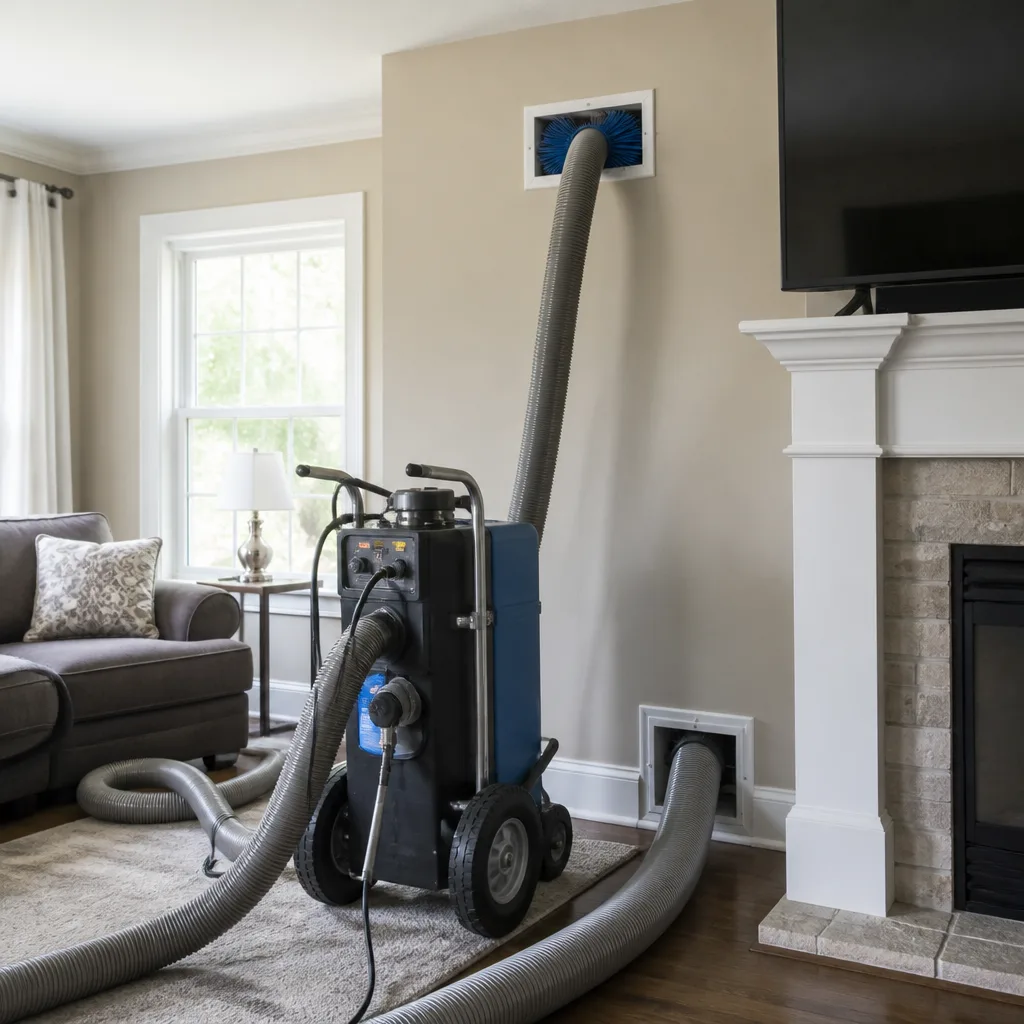 Whole-home duct cleaning
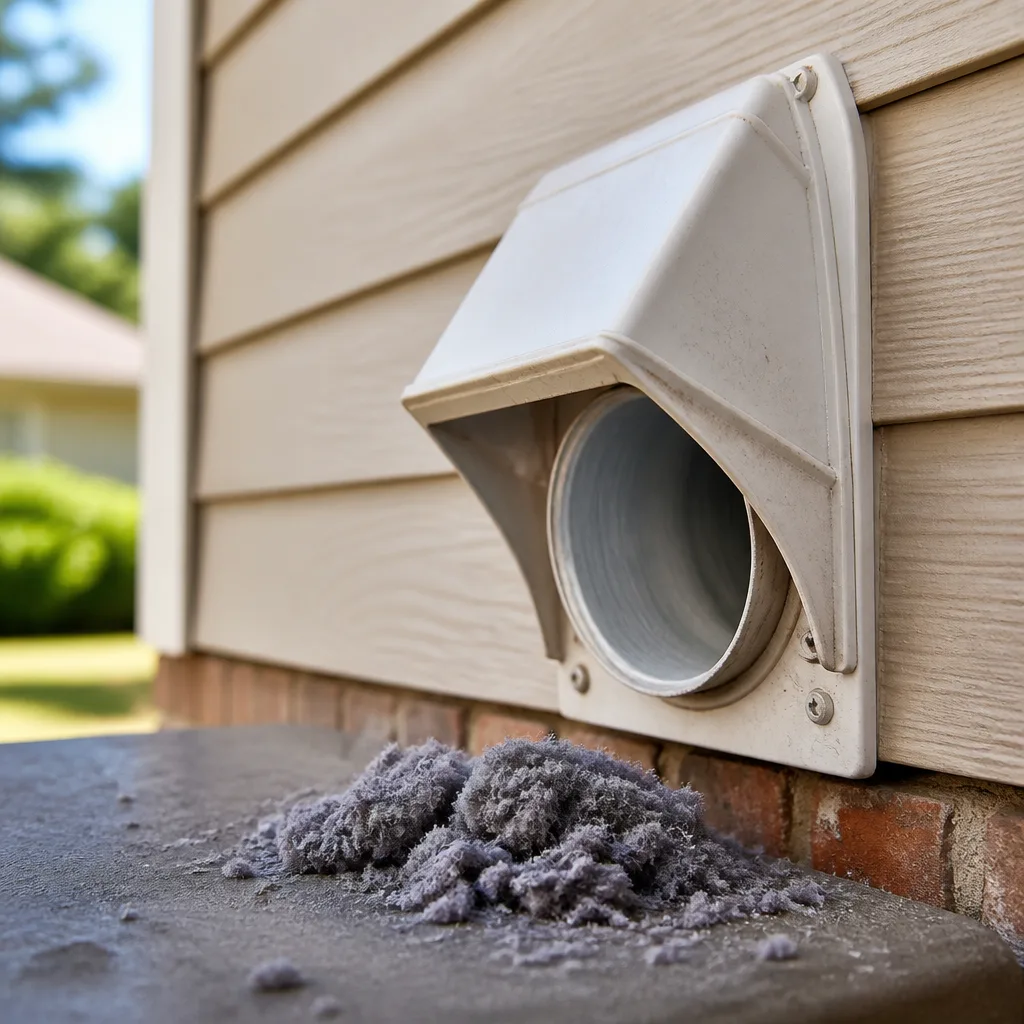 Dryer vent cleaning
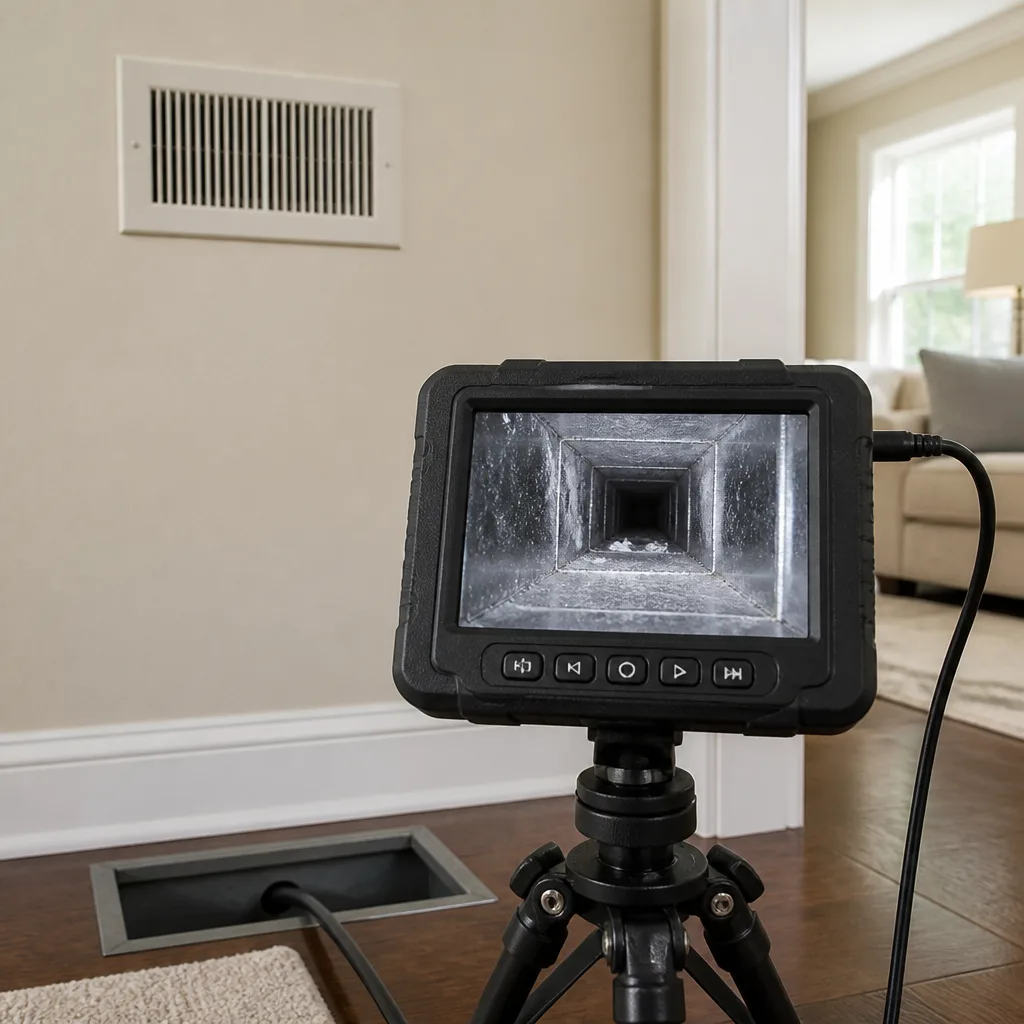 Camera inspection
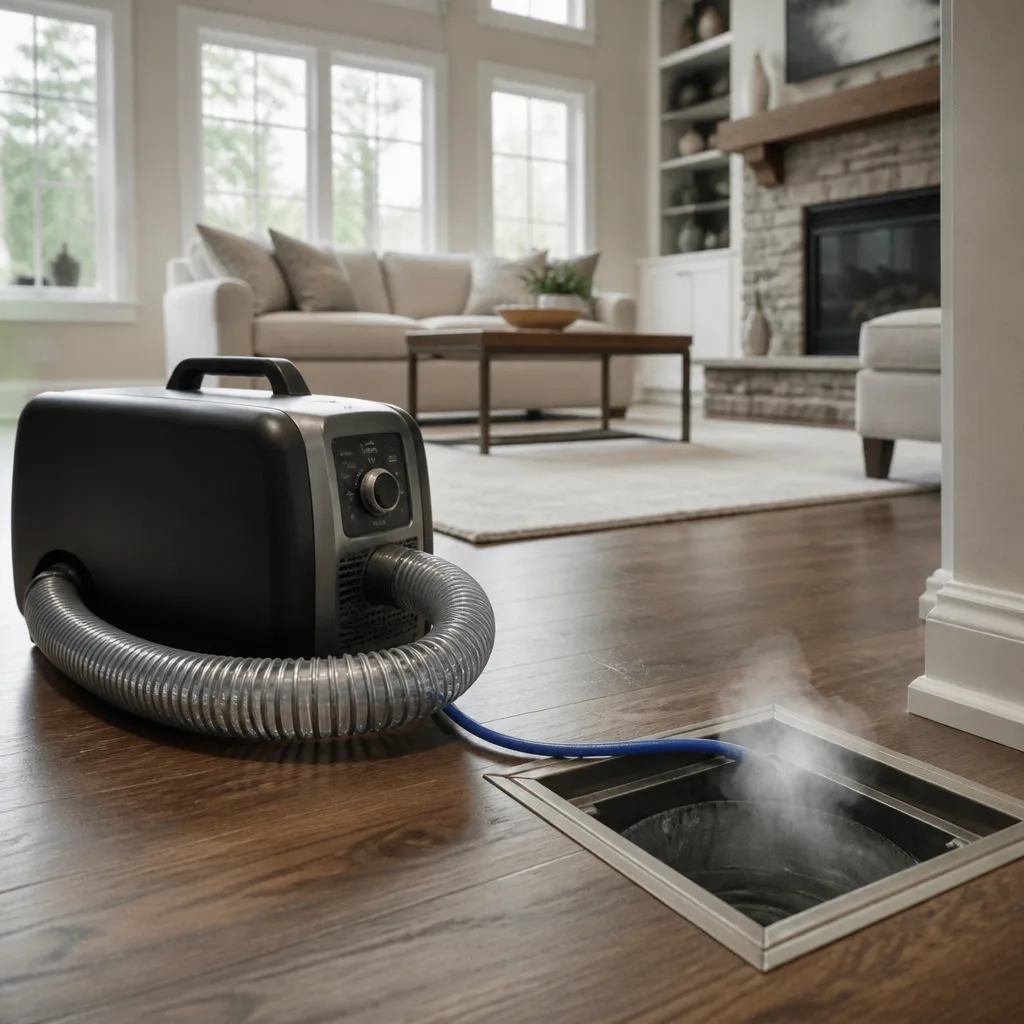 Sanitizing & deodorizing
Whole-system duct and dryer vent check with before-and-after photos - you see exactly what came out of your vents
That "$99 whole-house special" is a bait ad - the real number appears once they are in your hallway, or the "clean" is a shop-vac at the register. We photograph the inside of your ducts before and after instead.
Air Duct Cleaning Permits, Codes & Inspections in Fountain Valley, CA: What You Need to Know
Most homeowners in Fountain Valley assume that if a contractor charges money for air duct work, the contractor has already handled any paperwork. That assumption is exactly where problems start. A routine cleaning rarely triggers a permit. But the moment the technician replaces a flex duct run, seals a plenum, or modifies any sheet metal connected to the air handler, the legal classification of the job changes. This guide explains where that line sits under California code, how Fountain Valley’s building department treats duct work, and what documentation you should keep. If you’re planning air duct cleaning, you’ll want to read the sections on scope-of-work separation before signing anything.
Quick Answer
Cleaning the interior surfaces of existing air ducts does not require a permit in Fountain Valley, CA. Replacing duct sections, sealing the plenum, altering air handler components, or modifying the HVAC system’s airflow configuration usually does, because that work falls under California Building Code Title 24 mechanical provisions enforced by Orange County. Always ask your contractor to separate cleaning scope from repair or replacement scope in writing.
Styles & brands we work with
- Whole-home duct cleaning
- Dryer vent cleaning
- Camera inspection
- Sanitizing & deodorizing
Table of Contents
- The Legal Line: Cleaning vs. Mechanical Work
- What California Building Code Title 24 Actually Says
- How Fountain Valley and Orange County Enforce Duct Work
- C-20 HVAC License vs. Duct Cleaning-Only Operations
- How to Separate Cleaning Scope from Repair Scope in an Estimate
- Documentation to Keep After Any Duct Job
- How a Duct-Related Inspection Actually Works
- The Insurance Angle Nobody Explains
The Legal Line: Cleaning vs. Mechanical Work
Here’s the distinction that drives the entire conversation. Cleaning is the removal of accumulated debris – dust, pet dander, construction residue, or light microbial film – from the interior of existing ductwork. No structural changes. No component swaps. No airflow reconfiguration. Source removal using negative air pressure and agitation tools falls squarely on the cleaning side.
Mechanical work is everything else. If a contractor pulls out a crushed flex duct section and installs a new one, that’s a mechanical alteration. If they cut into the plenum to add or replace a connection collar, that’s a modification. If they remove the blower assembly from the air handler to clean it and then reinstall it, most jurisdictions treat that as servicing, but if they replace bearings, motors, or capacitors while they’re in there, it crosses into regulated work. The distinction matters because unpermitted mechanical work can leave a homeowner holding liability for a code violation they didn’t create.
In Fountain Valley, this is not a gray area for licensed contractors. It’s a clearly drawn line under California mechanical code. The problem is that many duct cleaning companies simply don’t tell customers where the line is because doing so complicates the sale. A written estimate that lists “remove and replace damaged duct section” alongside “vacuum all supply runs” is blending two legally distinct scopes. Separating them protects you.
What counts as cleaning (no permit needed)
- Negative-air vacuuming of supply and return ducts
- Rotary brush agitation of duct interiors
- Blower and coil cleaning performed in place
- Dryer vent lint removal
- Register and grille cleaning without duct modification
What counts as mechanical work (permit typically required)
- Replacing any rigid or flexible duct section
- Sealing or replacing the plenum
- Adding, moving, or removing supply registers
- Replacing air handler components beyond filters
- Modifying return air pathways or duct sizing
What California Building Code Title 24 Actually Says
California’s Title 24 is the state’s consolidated building standards code, and it’s adopted statewide with local amendments layered on top. The mechanical provisions – which cover HVAC systems, ducts, and air distribution – require permits for any installation, alteration, repair, replacement, or modification of mechanical systems. The key word is alteration. Cleaning is maintenance. Alteration is construction.
Title 24 also sets energy performance standards for duct systems. When ducts are replaced, the new materials must meet minimum insulation requirements, and the connections must be sealed to specific leakage standards. This is why a contractor who casually swaps a flex duct during a cleaning may be installing something that doesn’t meet current energy code – not because they’re malicious, but because they weren’t planning to pull a permit that would trigger an inspection verifying compliance.
Fountain Valley falls under the enforcement jurisdiction of Orange County for building code administration. The county inspects mechanical work to confirm it matches the approved permit scope. A homeowner who discovers later that unpermitted duct replacement occurred during what was billed as a “cleaning” may have to apply for a retroactive permit, pay fees, and open walls or ceilings for inspection. That’s an expensive lesson in paperwork timing.
There’s also a lesser-known requirement: Title 24 documentation. When you replace ducts in California, a Certificate of Compliance is generated as part of the permit record. That certificate proves the work met current code at the time of installation. If you sell your home in Fountain Valley and cannot produce it for duct work that was done after you bought the house, you may be required to bring the system into compliance before closing. This is not a hypothetical. It’s a standard escrow discovery item in Southern California real estate transactions.
How Fountain Valley and Orange County Enforce Duct Work
Fountain Valley contracts its building permitting and inspection functions through Orange County. That means the same inspectors who review residential remodels in Fountain Valley also review mechanical permits pulled for HVAC and duct projects. The county’s approach is straightforward: if it alters the mechanical system, it needs a permit. If it only cleans the existing system, it does not.
Our experience in Fountain Valley is that homeowners rarely hear about permits until something goes wrong. We’ve spoken with residents who replaced entire duct systems during a renovation, had the contractor handle permits correctly, and never thought about it again. We’ve also heard from homeowners who discovered unpermitted duct replacement done years earlier by a low-bid contractor – typically discovered during escrow, when the title report flags the missing permit record. The latter group pays more in remediation than the original job cost.
Fountain Valley’s housing stock is a mix of 1960s-era tract homes and newer construction. The older duct systems were built to less stringent standards – thinner gauge metal, unsealed joints, and minimal insulation. When duct components in these older homes are replaced, the new materials must comply with current Title 24 requirements, which usually means upgrading insulation and sealing. That’s a good thing for efficiency. It also means the work is more involved than a simple in-place swap, which is precisely why a permit and inspection should be part of the scope.
The city’s mild inland climate also shapes how duct systems age. Without extreme temperature swings, duct corrosion is less common than in harsher climates. What we see in Fountain Valley instead is dust accumulation from the surrounding dry landscape, light construction debris from renovations, and the slow buildup of household particulate in systems that were never cleaned after the original build. None of that requires a permit to address. It’s only when component replacement enters the conversation that the county gets involved.
C-20 HVAC License vs. Duct Cleaning-Only Operations
California issues contractor licenses by classification. The C-20 classification covers “Warm-Air Heating, Ventilating and Air-Conditioning” – essentially the full breadth of mechanical work on forced-air systems. A C-20 holder can legally replace ducts, modify plenums, service air handlers, and pull mechanical permits for that work. The license is issued by the Contractors State License Board after the applicant demonstrates four years of journey-level experience and passes the trade and law exams.
A duct cleaning-only operation may hold no contractor license at all. That is legal in California, because duct cleaning as a standalone service is not classified as construction. The company may operate under a general business license only. What it cannot legally do is perform any mechanical work – no duct replacement, no plenum modification, no air handler repair. If a cleaning-only company offers to “fix” a crushed duct while they’re in your home, that offer exceeds the legal scope of what an unlicensed-for-mechanical operation is permitted to perform.
This creates a practical problem for Fountain Valley homeowners. The company that quotes the lowest price for cleaning may also be the one that cannot legally perform the repair work you actually need. Some handle this by subbing the work out to a licensed contractor, which is fine if the permit is in place. Others simply do the work that shouldn’t be done and don’t mention the distinction. Asking whether the person doing the work holds a C-20 license, and whether they can pull a permit if mechanical work is discovered, is a completely reasonable question that any credible professional will answer without hesitation.
Wellington Air Duct Cleaning operates as a specialist in air duct systems. Our scope is cleaning, not mechanical construction. When we identify duct damage during a cleaning – a collapsed flex run, a dislodged connection, a torn plenum seam – we tell you what we found and what it means. We do not quietly expand into work that requires a license and permit we don’t hold. That distinction is part of why we’re straightforward about the separation between what a cleaning accomplishes and what a mechanical repair involves.
How to Separate Cleaning Scope from Repair Scope in an Estimate
The simplest protection you have against permit problems is a written estimate that separates two scopes of work. Here’s the process we recommend for any Fountain Valley homeowner getting quotes.
- Ask the contractor to list cleaning as a distinct line item. That means negative-air extraction, brush agitation, and register cleaning listed separately from anything else.
- Ask whether any component replacement is anticipated. If the answer is yes – even “we’ll see when we get in there” – ask for a separate line item labeled as mechanical work, with a note that it will require a permit.
- Verify who holds the C-20 license. If the person quoting the work cannot produce a C-20 license for the mechanical portion, that portion should not be in the estimate.
- Confirm the permit process. If mechanical work is likely, the estimate should state that the contractor will pull the permit with Orange County before starting that portion of the job.
- Get the final work order in writing. After the job, the invoice should reflect exactly what was cleaned and exactly what was replaced, with permit numbers listed if permits were pulled.
Why don’t all contractors do this? Because separating the scopes makes it harder to bundle a cheap cleaning into a much larger repair job once the van is at the curb. A competent specialist has no reason to avoid the distinction. It’s the contractor who wants to keep options open – options that may include unpermitted work – who resists a clean scope split. In our experience, a refusal to separate scope is as informative as anything else on the estimate.
Documentation to Keep After Any Duct Job
After any duct work in Fountain Valley, keep a file that would hold up through an insurance review or an escrow inquiry. It doesn’t need to be elaborate. It needs to be complete.
- Written estimate and final invoice showing scope items separated by cleaning versus mechanical work
- Permit number if any mechanical work was performed, issued by Orange County
- Final inspection sign-off showing the work passed code review
- Before and after photos of the duct interior, registers, and any replaced components
- Equipment documentation showing what tools were used for the work – professional-grade equipment details matter if claims arise
- Warranty information for any components that were replaced
Before-and-after photos deserve special emphasis. In duct cleaning, they are the single most useful piece of documentation you can hold. They prove the work was done, which matters because the ducts themselves are hidden behind drywall. A contractor who doesn’t photograph the duct interior before and after is asking you to trust a claim you can’t verify. We use inspection cameras to document every system we clean, and the photos go to the homeowner as part of the service record. If a claim or a resale issue ever comes up, those photos answer the first question: what did the system actually look like.
How a Duct-Related Inspection Actually Works
If mechanical work on your ducts does require a permit in Fountain Valley, the inspection process is predictable. The contractor pulls the permit with Orange County before starting the regulated portion of the work. The inspector reviews the installation after the work is complete but before walls or ceilings are closed. For duct replacement, the inspection focuses on material compliance, connection sealing, and proper support. The inspector checks that the installed components match the permit scope and that the work meets Title 24 energy requirements.
The homeowner’s role is limited but important. You confirm the permit is active before the mechanical work starts – you can verify this with Orange County’s online permit system using the permit number. You ensure the inspection is scheduled before any drywall goes back up. And you keep the final sign-off document. That’s it. The contractor handles the rest, which is why the contractor’s license and history matter so much.
For cleaning-only jobs, none of this applies. There is no inspection, no permit window, no county involvement. The work is classified as maintenance, and the documentation you keep is your own record of what was done. That distinction – cleaning as maintenance, replacement as construction – is the entire framework this guide rests on.
The Insurance Angle Nobody Explains
Homeowner’s insurance policies typically cover sudden and accidental damage, not gradual deterioration or unpermitted work. If a duct system fails and causes water damage, and the investigation finds that a portion of the duct was replaced without a permit, the insurer may deny the claim on the grounds that the work was not performed to code. The fact that you didn’t know the work was unpermitted doesn’t change the policy language.
This is the part of the conversation that never appears in a coupon mailer. A cheap duct cleaning is not a risk. A cheap duct cleaning that quietly turns into an unpermitted flex duct replacement is a different matter entirely. The insurance risk is not theoretical. We have talked to Fountain Valley homeowners who discovered unpermitted work during a claim process and had to fight for coverage they assumed was automatic.
The protection is simple. Know what’s being cleaned, know what’s being replaced, and require a permit record for anything on the replacement side. That’s the entire framework. It costs nothing to ask the question, and the answer tells you everything you need to know about the contractor you’re dealing with.
Common Mistakes to Avoid
- Signing an estimate that lumps “duct work” into one line item. If cleaning and mechanical repair share a single price, you can’t tell where one scope ends and the other begins.
- Hiring a cleaning-only company to replace damaged duct sections. Without a C-20 license and a permit, that work is legally exposed and likely non-compliant.
- Assuming the county doesn’t care about duct replacement. Orange County’s mechanical enforcement applies to Fountain Valley homes just as it does everywhere else in its jurisdiction. A missing permit shows up during escrow.
- Not photographing the before state. If you don’t know what the ducts looked like before the work, you can’t prove what changed.
- Treating dryer vent cleaning and duct cleaning as interchangeable. They are distinct services with distinct safety profiles. Our dryer vent cleaning service is a dedicated fire-safety measure, not an add-on.
- Assuming a permit means the work was inspected. The permit is only the first step. Failure to schedule the final inspection leaves the permit incomplete and the work legally unresolved.
- Throwing away the scope-of-work document after the job. That document is your first line of defense if a question ever arises about what was actually done.
See the difference
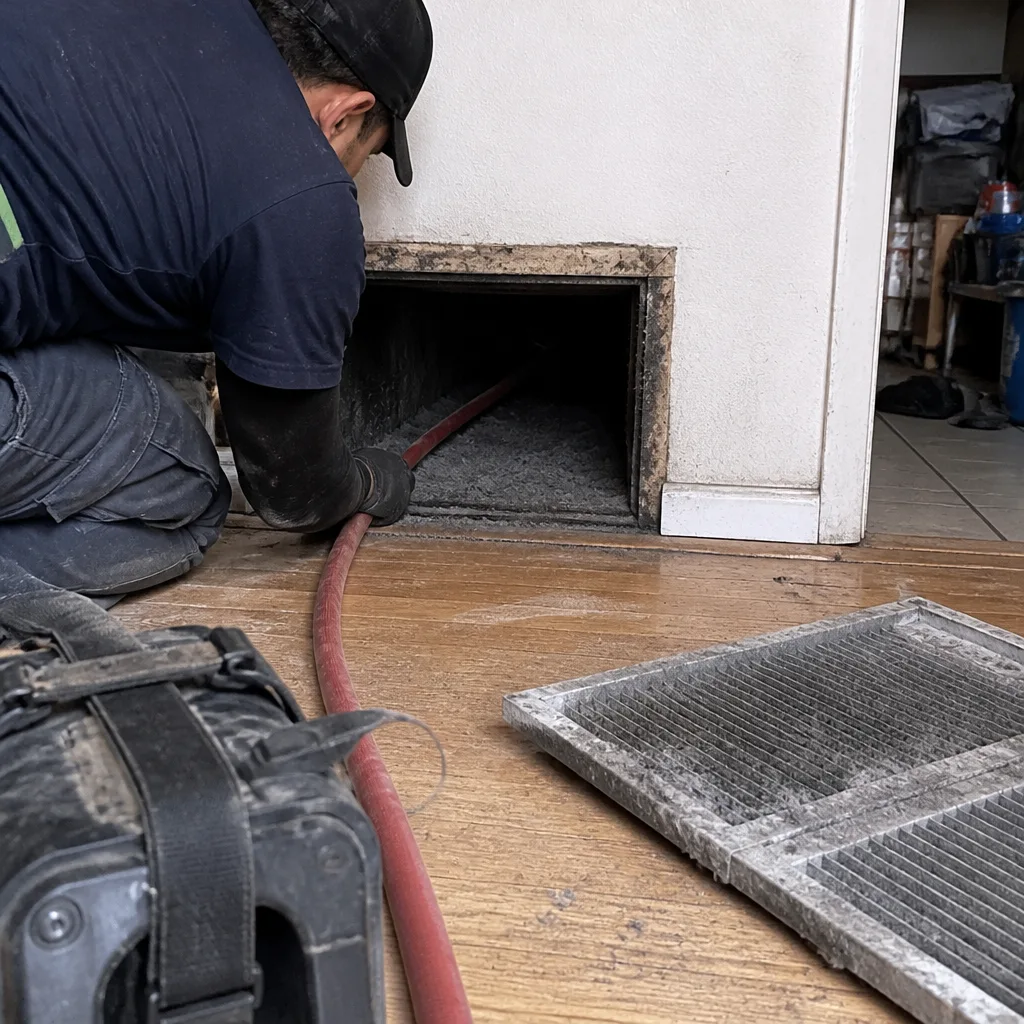 Before
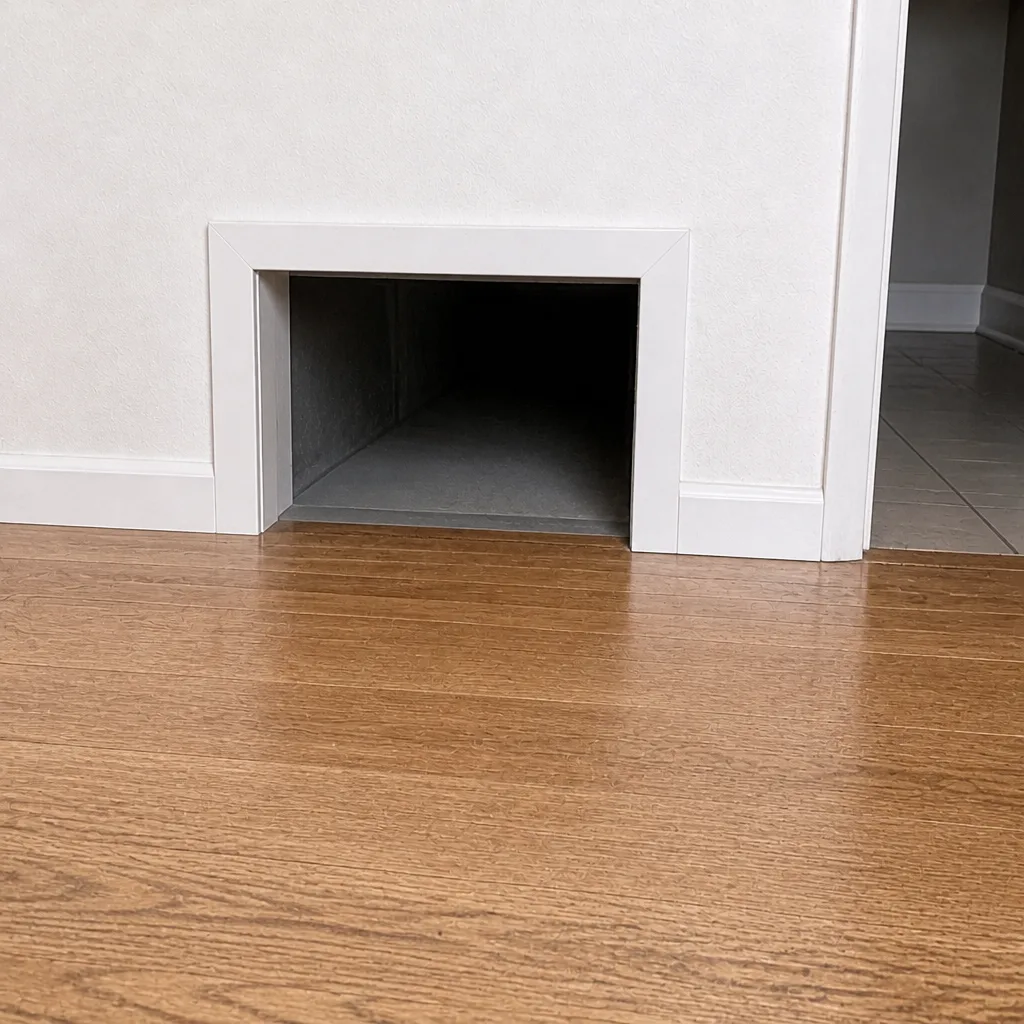 After
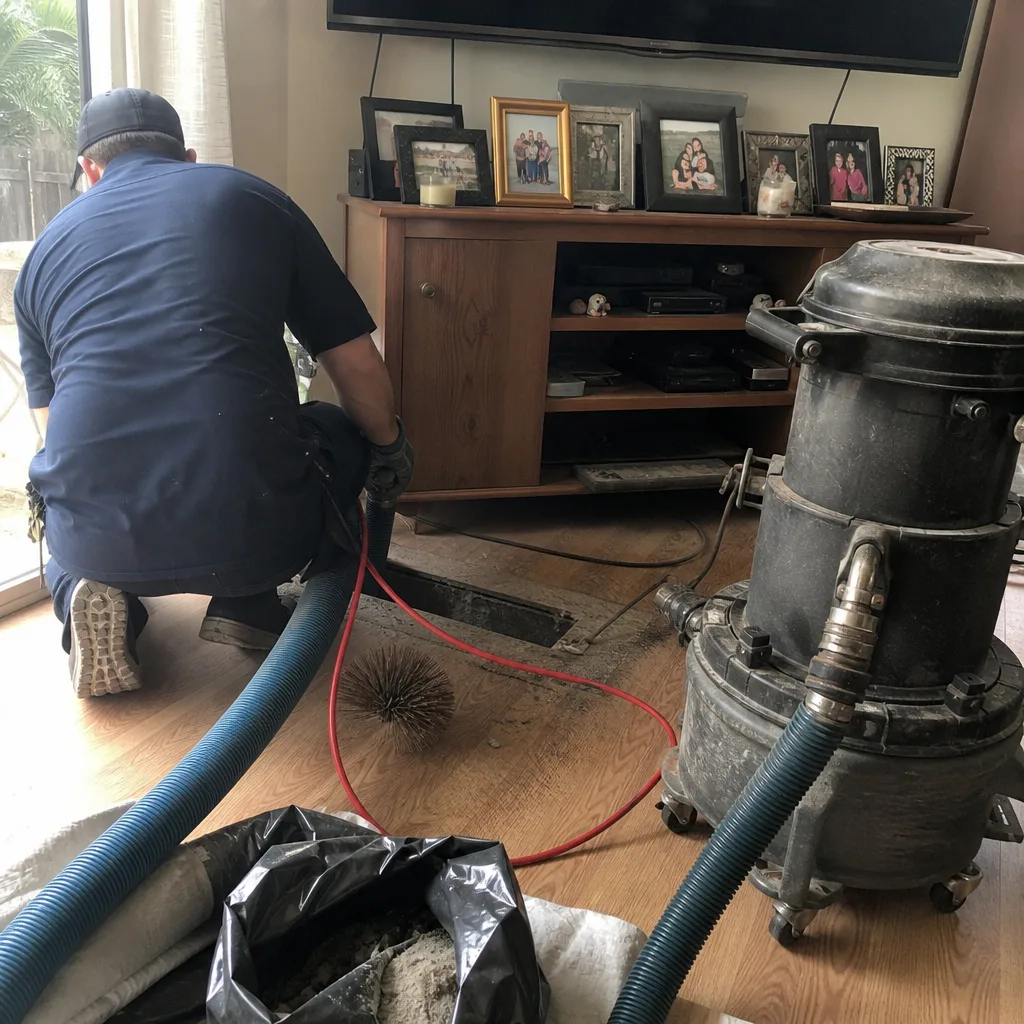 Before
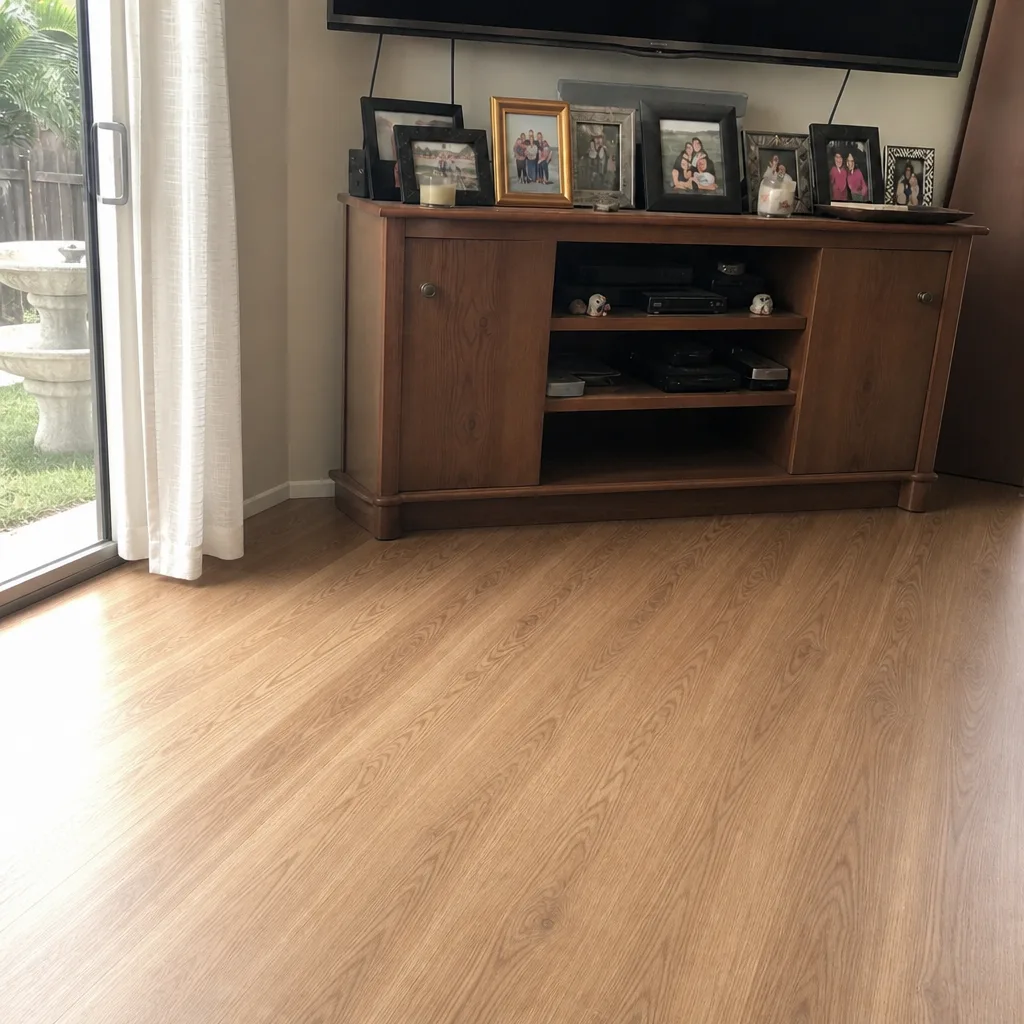 After
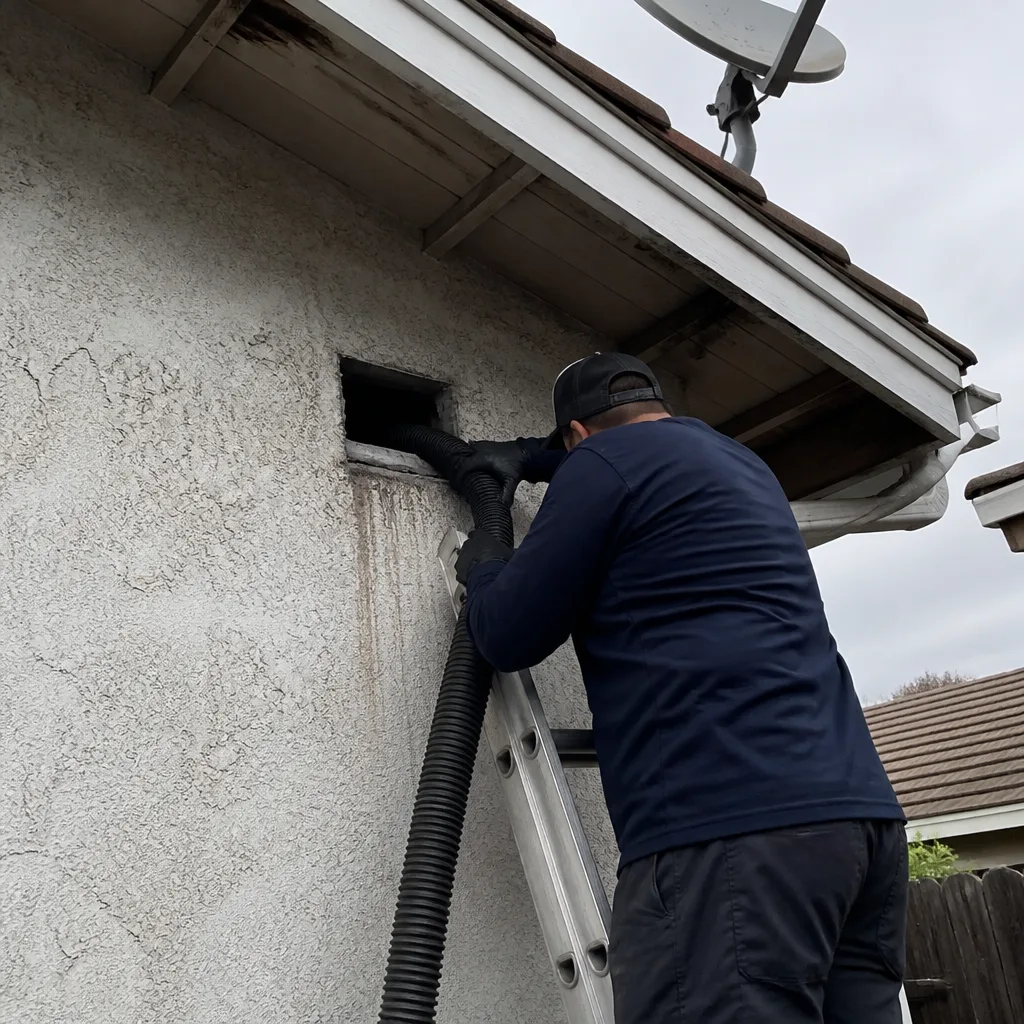 Before
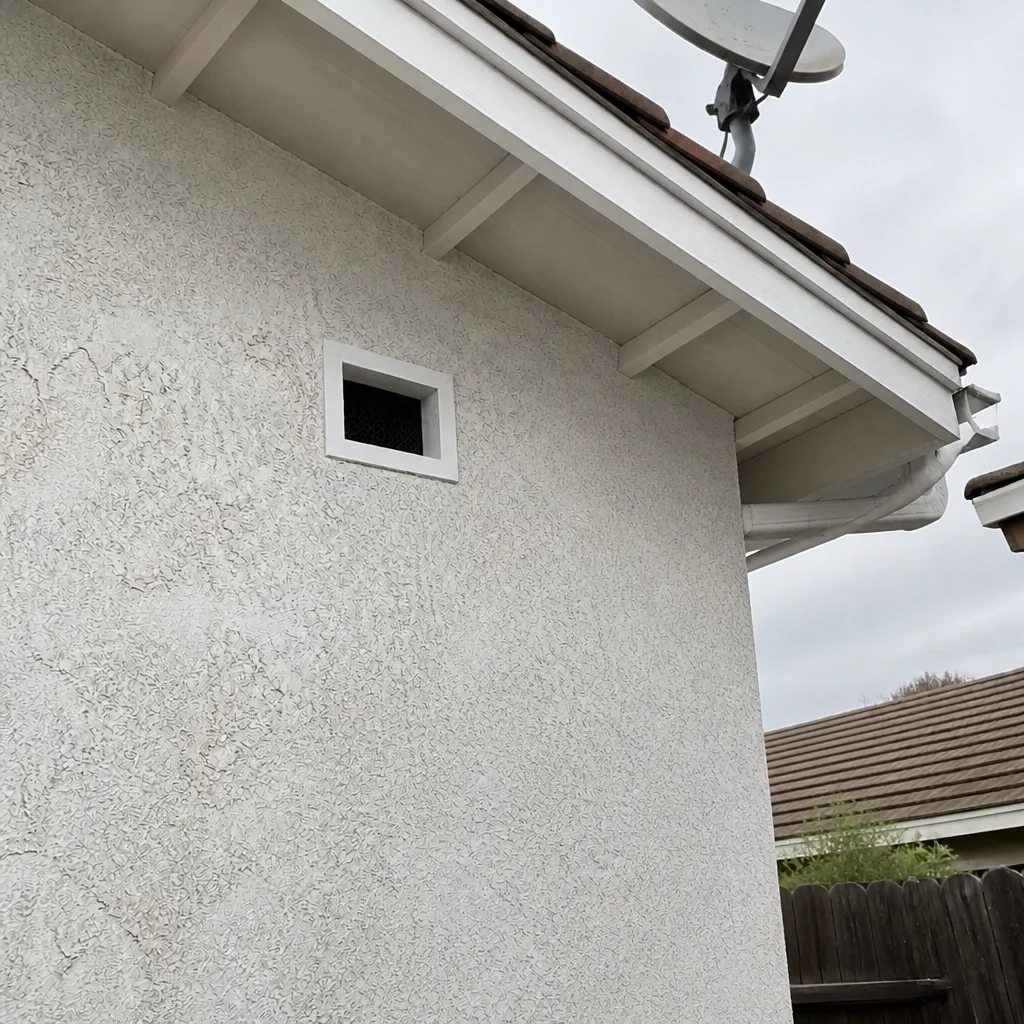 After
When to Call a Professional
If you know your ducts have physical damage – crushed flex sections, disconnected joints, or a plenum that’s coming apart – call a licensed C-20 contractor first. That work needs a permit, not a cleaning. If your ducts are intact but the system is full of dust, debris, or construction residue from a renovation, a specialist cleaning is the right call, and no permit is required. If you’re not sure which situation you have, which is where most Fountain Valley homeowners start, get an inspection that tells you plainly what condition your system is in before any work is quoted. Wellington Air Duct Cleaning offers free estimates in Fountain Valley – call (877) 358-4557. We answer 24/7. Fast dispatch from 7am to 7pm, Sunday through Friday.
Frequently Asked Questions
No. Cleaning the interior of existing ductwork is classified as maintenance, not construction, and does not require a permit anywhere in California, including Fountain Valley. The permit requirement kicks in only when duct components are replaced or modified.
Yes. Replacing flex duct sections, sealing the plenum, altering air handler components, or changing the configuration of the duct system falls under mechanical work regulated by California Building Code Title 24 and enforced by Orange County. A permit and final inspection are required.
The first sign is a final invoice that lists component replacement but includes no permit number. Orange County’s online permit system lets you search by address to see whether any mechanical permits were issued for the work. If the work happened and no permit exists, the work was unpermitted.
A C-20 license is California’s mechanical contractor classification covering HVAC systems, including duct replacement and modification. A duct cleaning-only company without a C-20 cannot legally perform duct replacement. Always confirm who holds the C-20 for any mechanical portion of the job.
Dryer vent cleaning is a maintenance service and does not require a permit. It addresses a separate safety concern – lint accumulation is a leading cause of residential dryer fires – and should be treated as its own dedicated service, not a side note to duct cleaning.
Escrow will typically flag the missing permit record, and the seller may be required to obtain a retroactive permit, pay associated fees, and open walls or ceilings for inspection before the sale can close. It’s one of the most common ways unpermitted mechanical work surfaces.
The Bottom Line
The permit question in Wellington Air Duct Cleaning has a clean answer: cleaning is maintenance, replacement is construction. Fountain Valley homeowners who understand that distinction are protected from the two biggest risks in this industry – unpermitted mechanical work that surfaces during a claim or sale, and contractors who blur the line to close a sale. Keep your scope documents. Keep your photos. Ask about the C-20 license. And if your system is full of dust but structurally sound, a professional cleaning with proper documentation is straightforward, effective, and entirely permit-free.
Written by the team at Wellington Air Duct Cleaning, serving Fountain Valley since 2013.