
Last updated November 4, 2026
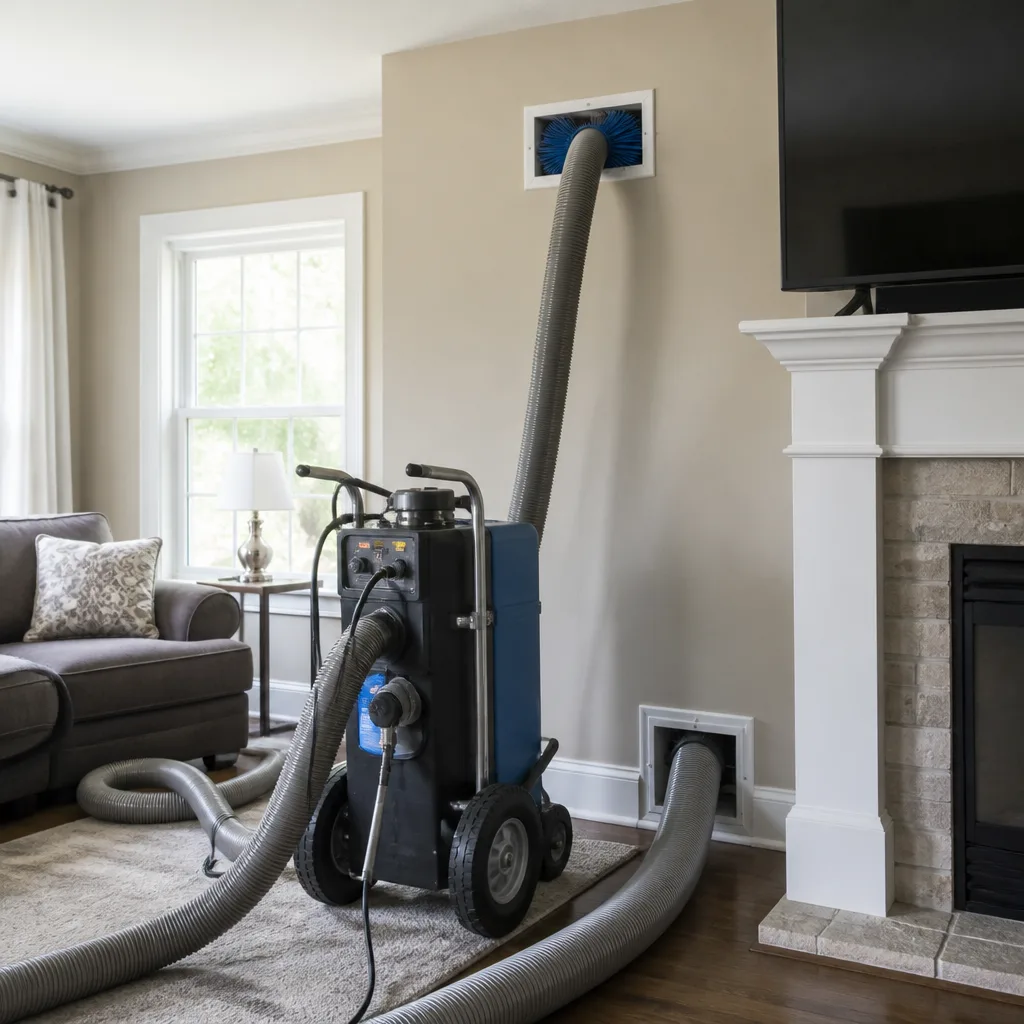 Whole-home duct cleaning
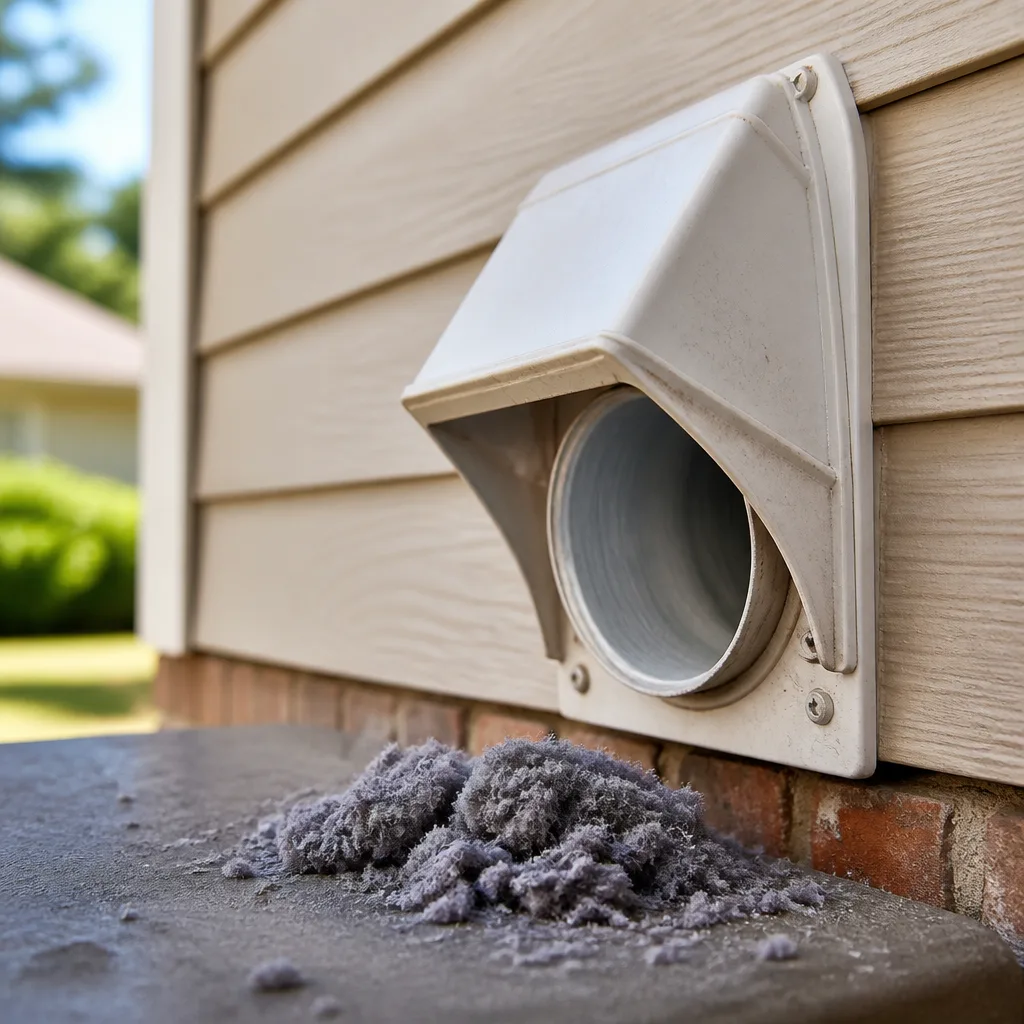 Dryer vent cleaning
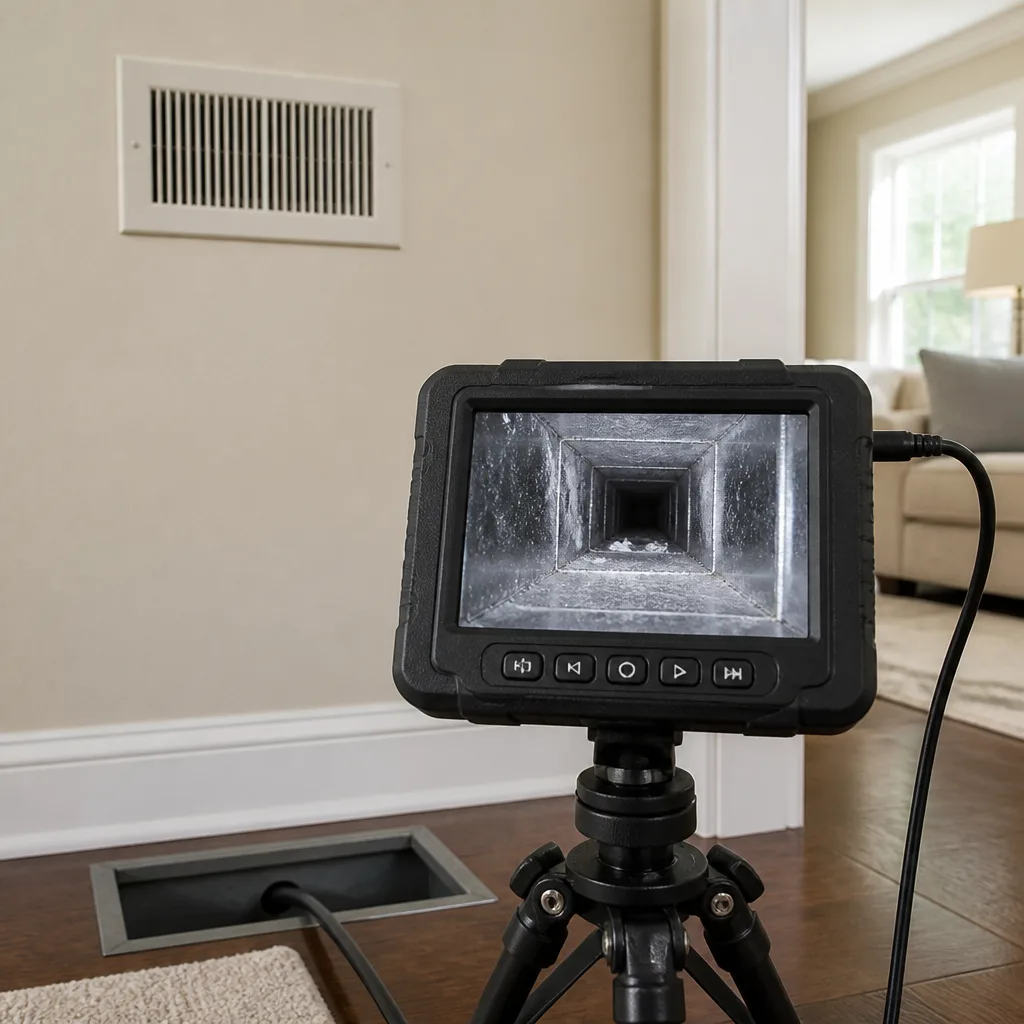 Camera inspection
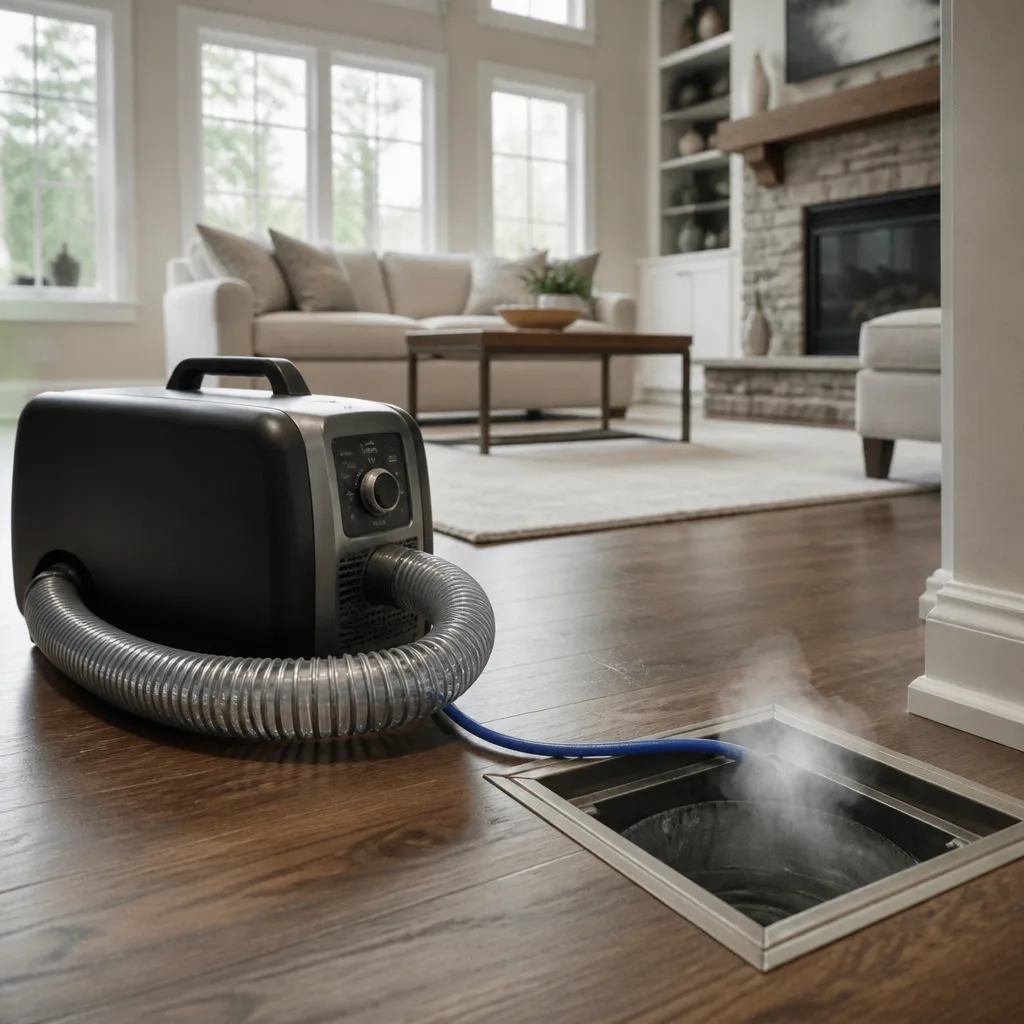 Sanitizing & deodorizing
Whole-system duct and dryer vent check with before-and-after photos - you see exactly what came out of your vents
That "$99 whole-house special" is a bait ad - the real number appears once they are in your hallway, or the "clean" is a shop-vac at the register. We photograph the inside of your ducts before and after instead.
DIY vs Professional Air Duct Cleaning: The Fountain Valley Homeowner’s Decision Guide
Most Fountain Valley homeowners assume the difference between renting a machine and hiring a pro is effort. You work harder, save money, and end up with roughly the same result. That assumption falls apart the moment you see the numbers: a consumer-grade attachment for your shop vacuum pulls 1 to 2 inches of water column at best. A professional Rotobrush or Nikro system paired with a truck-mounted vacuum moves 15,000 to 20,000 CFM. That isn’t a difference in elbow grease. It’s a fundamentally different job. This guide explains exactly what you can realistically accomplish yourself, where your efforts stop being useful, and when the equipment in your garage simply cannot do what the air system in your home actually needs.
Quick Answer
Fountain Valley homeowners can handle register cleaning, grille washing, filter replacement, and basic visual inspection with ordinary household tools. What they cannot do is create enough negative pressure to dislodge and capture the debris that binds to duct walls after years of normal use. If your system hasn’t been cleaned in five or more years, shows signs of rodents, has visible moisture staining, or sits downstream from a recent renovation, call a professional air duct cleaning company. Otherwise, consistent DIY maintenance extends the interval between pro cleanings but doesn’t replace them.
Styles & brands we work with
- Whole-home duct cleaning
- Dryer vent cleaning
- Camera inspection
- Sanitizing & deodorizing
Table of Contents
- The Vacuum Pressure Gap: Why DIY Equipment Falls Short
- What Fountain Valley Homeowners Can Legitimately Do Well
- Where DIY Attempts Actively Cause Damage
- Conditions That Make Professional Cleaning Non-Negotiable
- How DIY Maintenance Extends the Interval Between Professional Cleanings
- What a Professional Can Verify That a Homeowner Cannot
- Fountain Valley-Specific Considerations for Duct Health
- Common Mistakes to Avoid
- When to Call a Professional
The Vacuum Pressure Gap: Why DIY Equipment Falls Short
Static pressure is the measurement that matters in duct cleaning, and it’s where the DIY approach hits a hard physical wall. Your household vacuum cleaner generates suction measured in inches of water column. A strong shop vac might pull 2 inches on a good day. Professional negative-air machines built into truck-mounted systems pull 15 to 20 inches, paired with airflow volumes of 15,000 to 20,000 CFM. The distinction is crucial because debris inside ductwork doesn’t rest loosely on a flat surface. It’s embedded in dust, adhered to the walls by static charge and years of humidity cycles, and packed into the flex duct’s internal liner. Low-pressure systems simply move air around that surface. High-pressure systems lift it off.
That’s why rental machines and attachment kits fail in practice. They create enough disturbance to loosen loose dust near the register boots, but they can’t generate the pressure differential needed to pull contaminants from the deeper runs. What often happens is the opposite of cleaning: the agitation loosens material, and the insufficient capture pressure lets it resettle further down the duct. The air in your Fountain Valley home hasn’t improved. The debris has just been redistributed.
Equipment matters because the physics doesn’t allow shortcuts. Rotobrush and Nikro systems are built for full-system extraction, not surface-level vacuuming. That’s not marketing language. It’s the difference between a pressure washer and a garden hose, applied to the inside of your walls.
What Fountain Valley Homeowners Can Legitimately Do Well
There’s a real, useful role for the homeowner that doesn’t involve pretending to be a duct cleaner. Several maintenance tasks fit naturally into a seasonal routine and produce measurable results. The key is doing them well and understanding their limits.
- Register and grille cleaning. Remove supply registers and return grilles, wash them in warm soapy water, dry them completely, and reinstall. This removes the visible dust that triggers homeowner concern and prevents it from re-entering the air stream.
- Filter replacement. Change HVAC filters on a schedule, not when they look dirty. A filter’s effectiveness declines before it turns black. In a Fountain Valley home with pets or open windows during mild months, check monthly and replace every 30 to 60 days.
- Return-air register vacuuming. Use a brush attachment on a standard vacuum to clear visible buildup around the return grille. This is surface cleaning, not duct cleaning, but it keeps the entry point clear.
- Visual inspection. Remove a register or two and look inside with a flashlight. You’re checking for visible mold, rodent droppings, moisture staining, or heavy debris accumulation. If you see any of those, stop DIY work and call a professional.
- Supply boot wiping. The metal collar connecting the register to the duct can be wiped clean with a damp cloth. This catches dust that would otherwise blow back into the room.
These tasks are legitimately useful. They keep the accessible portions of the system clean and give you an early-warning system for problems deeper in the ductwork. What they don’t do is clean the 30 to 150 linear feet of duct running through walls, attics, and crawlspaces where the actual contamination lives.
Where DIY Attempts Actively Cause Damage
Most DIY duct cleaning advice comes from a place of optimism, not experience. We’ve seen the results when that optimism meets flex duct: damage that costs more to repair than professional cleaning would have cost in the first place. Air Duct Repair is a core part of what Wellington Air Duct Cleaning does, and a portion of that repair work exists because a previous DIY attempt made things worse.
Three specific failure modes show up repeatedly:
- Dislodging debris without sufficient capture pressure. A low-powered vacuum head agitates settled dust, dander, and construction debris, but can’t pull it out of the system. The material goes airborne inside the ducts and resettles in a new location, often deeper and harder to reach.
- Damaging flexible duct liners with rigid brushes. Flex duct has a thin inner liner surrounding the wire coil. Aggressive brushing with a stiff-bristle tool tears that liner. The result is air leaks, reduced efficiency, and a pathway for attic air to enter the conditioned space. Fountain Valley summer heat makes each of those a more expensive problem.
- Disturbing settled contamination near the air handler. The area around the coil and blower motor is sensitive. Debris disturbed there can get pulled into the coil fins, reducing heat exchange efficiency and forcing your HVAC system to work harder during the mild but humid stretches Fountain Valley gets each year.
If you’re working with a tool purchased from a big-box store, the honest approach is to treat it as a register-cleaning aid, not a duct-cleaning solution. The moment it extends more than a foot or two into the duct run, you’re working beyond what that tool was designed to do.
Conditions That Make Professional Cleaning Non-Negotiable
Some situations eliminate the DIY question entirely. You could have the best intentions, the right filters, and a clean house, and still need professional equipment. The following conditions call for immediate professional attention in any Fountain Valley home:
- Post-renovation debris. Drywall dust, sawdust, and construction particulates are fine enough to pass through standard filters and settle throughout the duct system. If you’ve done any remodeling, the ducts are contaminated, and no homeowner tool is getting that fine material out.
- Rodent evidence. Droppings, nesting material, or dead rodents inside ductwork are a health hazard. Professional cleaning removes the contamination and identifies how the pests got in. This is not a task for a shop vac.
- Moisture damage or visible mold. If you see staining, smell musty odors, or spot visible growth inside the duct, the cause must be found and the contaminated area professionally cleaned. Surface wiping does not address what’s embedded in the liner.
- Systems not cleaned in 5 or more years. After five years of normal operation, most systems have accumulated enough pet dander, skin cells, dust, and debris that only professional negative-pressure cleaning will restore them. If you can’t remember the last time your ducts were cleaned, it’s time.
We also recommend professional dryer vent cleaning as a standalone safety measure. Lint accumulation is one of the leading causes of residential fires, and it’s a problem your HVAC company isn’t thinking about when they service your furnace. It deserves dedicated attention.
How DIY Maintenance Extends the Interval Between Professional Cleanings
Professional cleaning isn’t an annual event for most homes. The interval between cleanings depends on household factors: pets, occupant count, window habits, and whether the home is near open land. Fountain Valley’s dry Santa Ana periods and mild winters mean windows are open more often than in harsher climates, which introduces more outdoor particulate matter into the system.
Consistent DIY maintenance can stretch a professional cleaning interval from three or four years to five or six, but the mechanism is important to understand. What you’re doing is controlling the amount of new material entering the system:
- Filter discipline is the single highest-impact habit. A clean, correctly rated filter captures particulate before it enters the air handler and ductwork. A neglected filter lets everything through.
- Register and grille cleaning prevents accumulated dust at the exit points from being pulled back into the system when the fan cycles off.
- Vacuuming and dusting the home regularly reduces the volume of material available to be drawn into the return air and pumped through the ducts.
- Dryer vent cleaning (professionally done) prevents lint from backing up and interfering with indoor air quality in the laundry area, which adjacent duct runs can then distribute.
The maintenance you do doesn’t clean the ducts. It reduces the rate at which the ducts get dirty. That’s a valuable distinction, and it’s why a homeowner who does everything right still needs professional cleaning eventually. The system loads slower, not less permanently.
What a Professional Can Verify That a Homeowner Cannot
There’s a verification gap in DIY work that becomes obvious the moment you consider what you can’t see. Fountain Valley homes typically hide the majority of ductwork in attics, behind walls, and through crawlspaces. You can inspect the first foot from the register. A professional can inspect the entire run.
Wellington Air Duct Cleaning works across the full ecosystem of leading air quality brands including Honeywell and Aprilaire equipment. That fluency matters because the condition of the ductwork is only part of the picture. The coil, the blower, the filter housing, and the plenum all contribute to system health. A trained technician checks all of them.
What a professional verifies:
- Airflow balance. Are certain rooms receiving less conditioned air because of duct restrictions or leaks?
- Duct integrity. Are there disconnected joints, crushed flex runs, or torn liners that a visual inspection from the register can’t reveal?
- Contamination type and source. Is the dust normal household material, or is it construction debris, pest-related, or moisture-related material that requires a different response?
- Post-cleaning verification. With professional equipment, we can show you before-and-after images of the actual ductwork, so you’re not trusting a verbal assurance. You’re seeing the result.
That last point matters for homeowners who’ve been burned by low-effort cleaning in the past. You’ll know the work was done because you saw the inside of your own ducts before and after.
Fountain Valley-Specific Considerations for Duct Health
Fountain Valley’s climate shapes its duct contamination profile in specific ways. Winters are mild and short, which means no heating season long enough to bake dust onto heat exchangers. What it does have is a long cooling season and frequent window-open weather in spring and fall. Both patterns matter for duct hygiene.
The cooling season is the dominant air-movement period for most local homes. Run for eight or nine months a year, the air handler moves a lot of air through filters that may or may not be well-maintained. Each cycle pushes fine particulate deeper into the ductwork. That’s why systems in Fountain Valley often show a distinct pattern: heavy accumulation in the return plenum and the first several feet of the main trunk, where air velocity drops and the duct walls are close to the air handler.
Window-open weather introduces outdoor material directly into the living space, which then enters the return air path. Homes near the city’s parks, school grounds, or open spaces deal with more pollen and fine soil dust than homes in entirely built-out neighborhoods. The register on the return side becomes the front line, and it’s where homeowner maintenance genuinely helps.
One more factor worth noting: Fountain Valley homes built across the city’s decades-long development boom vary in HVAC configuration. Older single-story homes often have attic-mounted duct runs accessible only from a crawlspace entrance. Some newer homes route everything through interior soffits. Neither configuration changes the physics of what homeowner tools can reach. Both respond to professional negative-pressure cleaning.
Wellington Air Duct Cleaning approach to cleaning any Fountain Valley system starts with the same principle: the equipment has to match the job. Professional-grade Rotobrush and Nikro systems, not because the brands matter, but because the pressure and airflow they create is what removes embedded material rather than just relocating it.
Common Mistakes to Avoid
- Rental machines with poor capture pressure. A rental vacuum with a brush attachment dislodges dust and sends it deeper into the system. You’ll feel like you worked hard and your air won’t be any cleaner. If the machine can’t pull 15 inches of water column, it’s not cleaning your ducts.
- Using a leaf blower to blow out ductwork. This is an old DIY trick that creates enormous positive pressure in the duct and sends debris into every room of the house. The duct gets “clean” because everything in it is now in your living space.
- Rigid brush attachments from online marketplaces. A stiff-bristle brush on a drill will tear flex duct liners. The repair cost exceeds what professional cleaning would have cost, and the collateral damage includes reduced HVAC efficiency.
- Cleaning only the visible register areas and considering the job done. The first few inches of duct behind a register is the cleanest part of the system. It’s the 30 feet in the middle that holds most of the accumulation.
- Skipping the filter replacement schedule. A clogged filter forces the blower to work harder and pressurizes the system in ways that push air past the filter edge, contaminating the ductwork with unfiltered air.
- Attempting moisture remediation without addressing the source. If a section of duct is wet, cleaning it without finding the leak or condensation point just delays the recurrence. The moisture source has to be fixed or the contamination returns.
- Ignoring the dryer vent while focusing on the HVAC ducts. The dryer vent is connected to your home’s air system indirectly and is a documented fire risk independent of HVAC condition. It needs its own dedicated cleaning interval.
When to Call a Professional
Call a professional if your system hasn’t been cleaned in five or more years, if you’ve completed any renovation work, if you see rodent evidence or moisture staining inside ducts, or if you notice persistent dust on surfaces despite regular filter changes. These conditions sit beyond what homeowner equipment can address. Wellington Air Duct Cleaning offers free estimates in Fountain Valley. Call (877) 358-4557 to schedule an assessment. We’ll show you what’s actually inside your ducts and give you a straight answer about whether cleaning is warranted.
See the difference
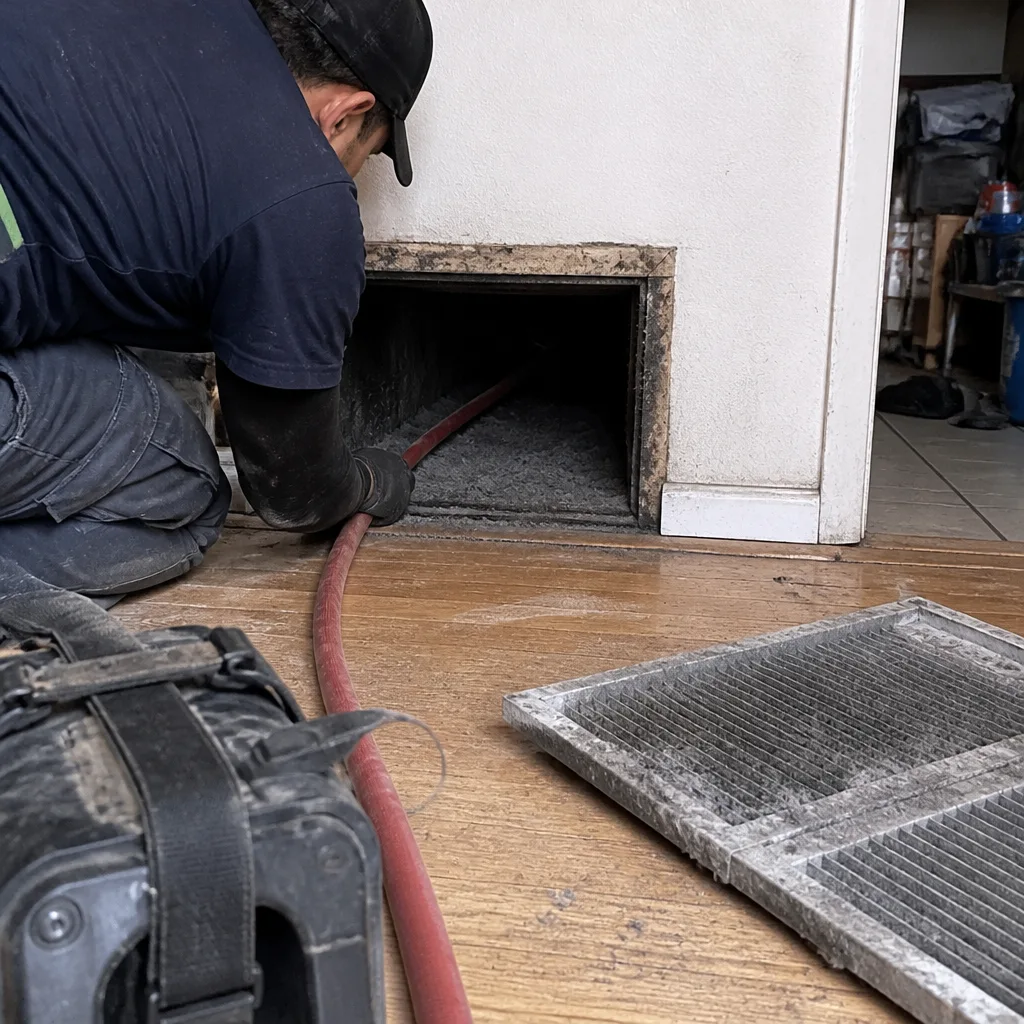 Before
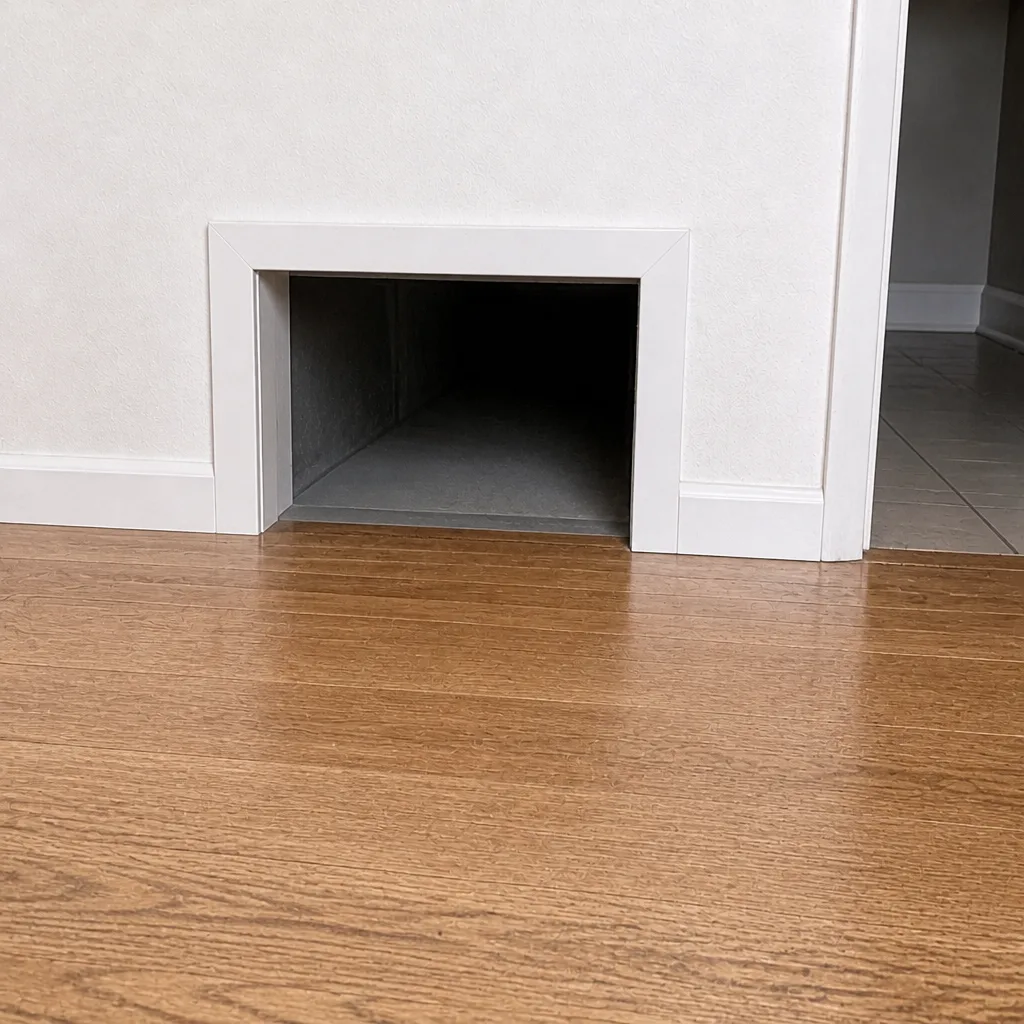 After
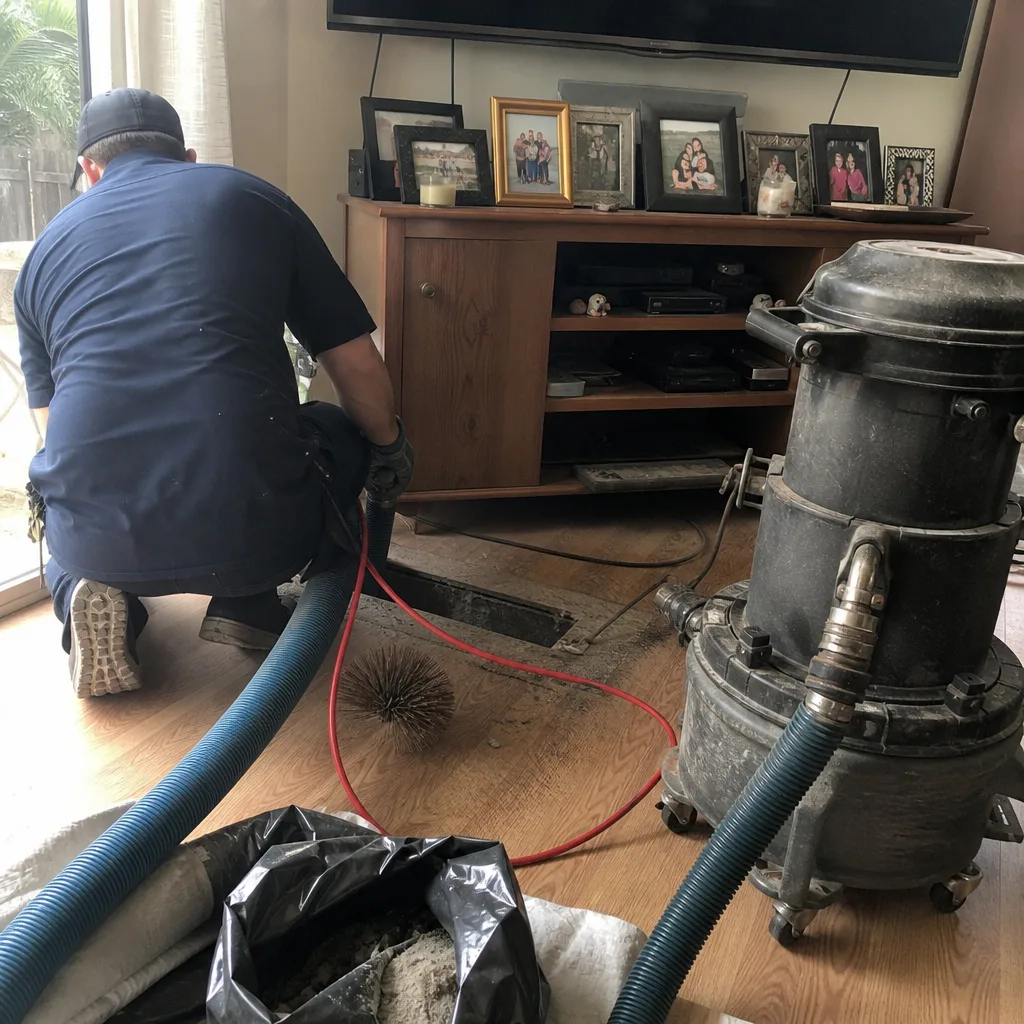 Before
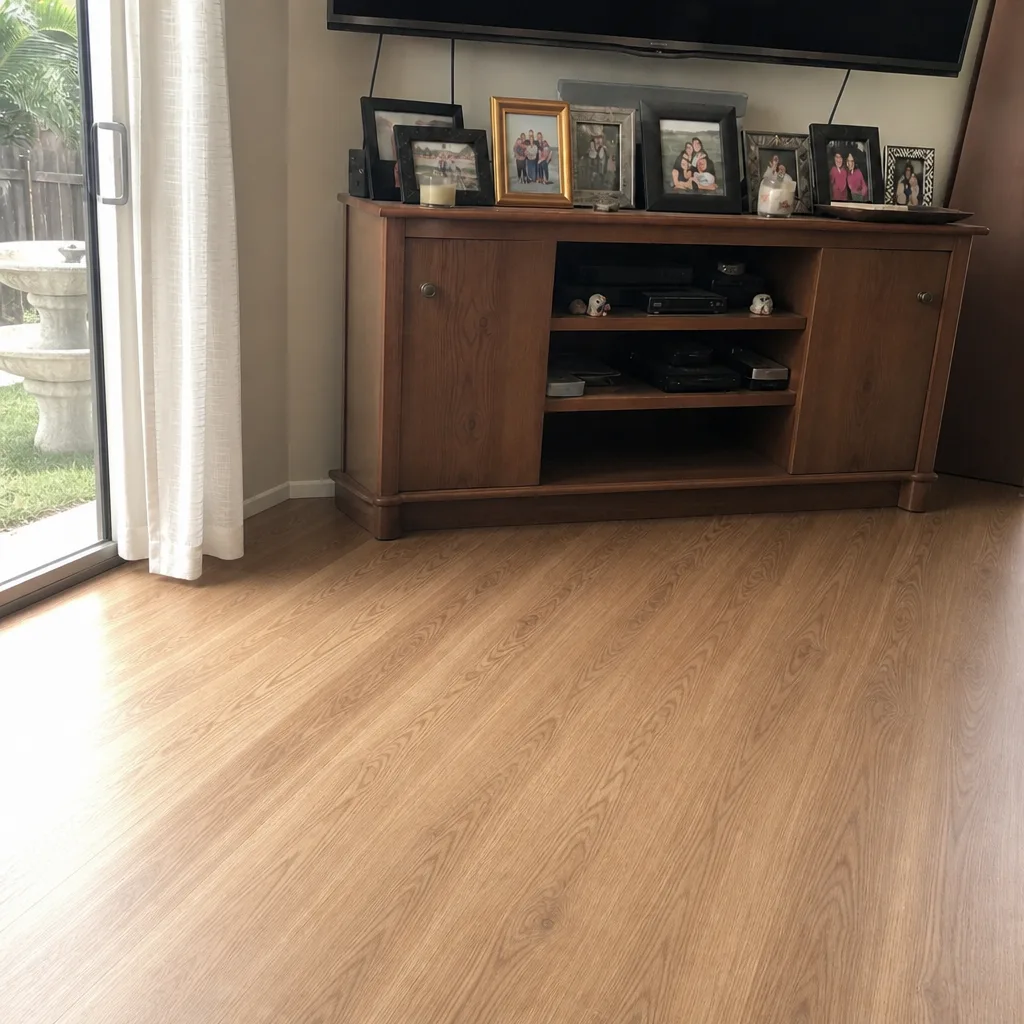 After
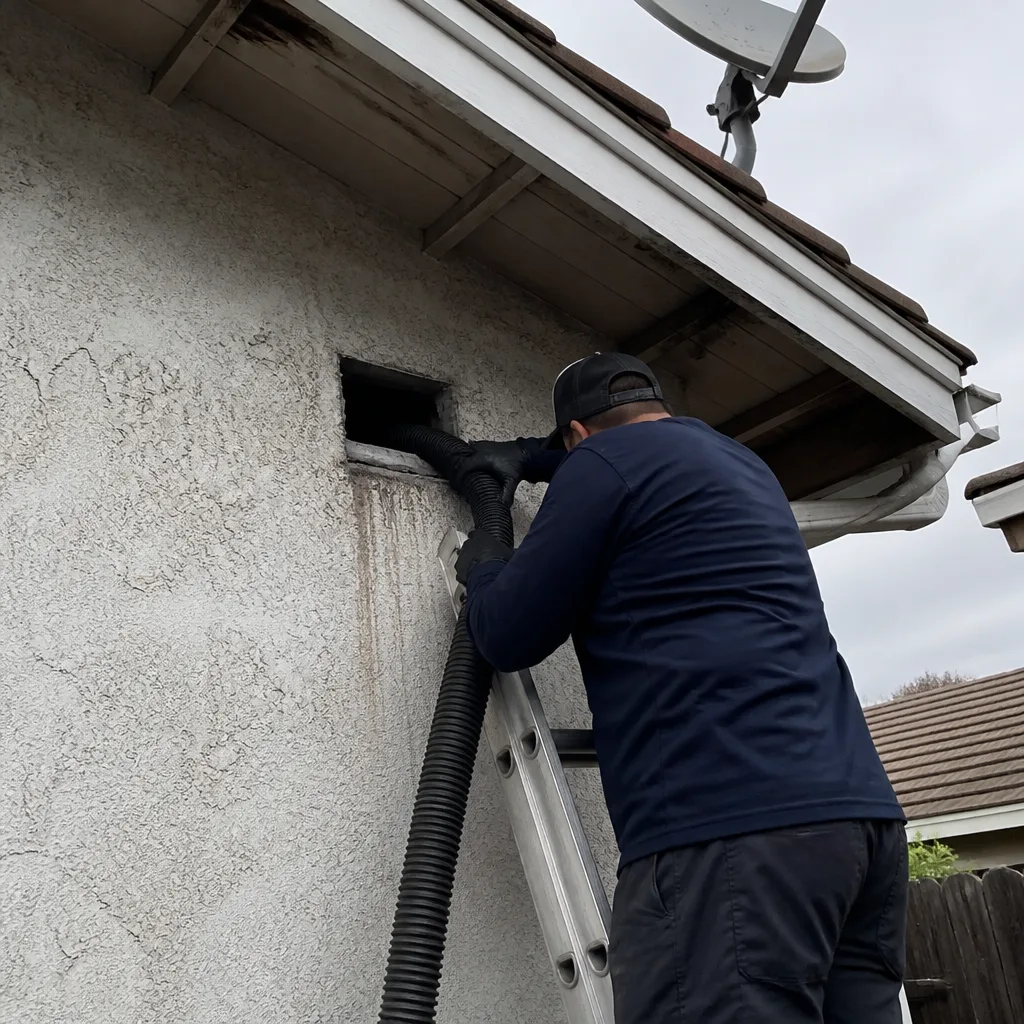 Before
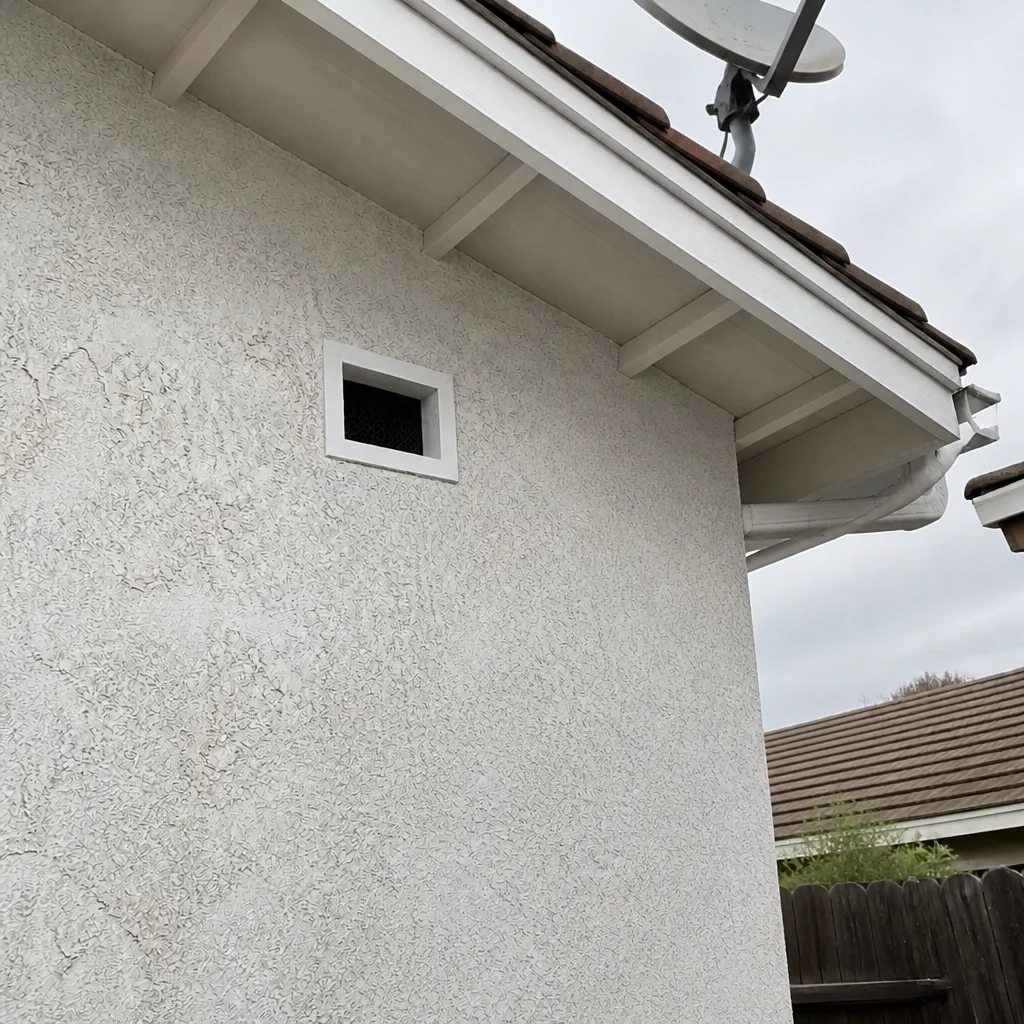 After
Frequently Asked Questions
Air duct cleaning in Fountain Valley typically falls in the range of $300 to $500 for an average single-family home, though larger systems or heavily contaminated ductwork can run higher. The final price is set by a written estimate after we inspect your specific system, its size, and its condition. Call (877) 358-4557 for a free estimate based on your actual ducts, not a per-vent guessing game.
A shop vac generates roughly 1 to 2 inches of water column in static pressure, which is far below the 15 to 20 inches professional Rotobrush and Nikro systems produce. You can clean the visible register openings and return grille, but the vacuum cannot lift embedded debris from the interior duct walls. The honest answer is that DIY tools handle the entry and exit points, not the system itself.
Most Fountain Valley homes benefit from professional cleaning every 3 to 5 years, depending on pets, occupant count, and how often windows are open. Homes with multiple pets or recent renovation work may need more frequent attention. Consistent filter replacement and register cleaning stretch the interval, but don’t eliminate the need.
Low quotes often come from companies using low-pressure equipment, pricing per vent with added charges later, or treating duct cleaning as a sideline to another trade. A cleaning performed with equipment that can’t pull adequate negative pressure will not remove embedded contamination, regardless of what it costs. The price difference reflects equipment and thoroughness, not just profit margin.
Ask for before-and-after photos of the interior of your ductwork taken during the job. A professional company using inspection cameras can show you the condition before cleaning and the result after. Wellington Air Duct Cleaning provides this verification as standard practice, because you shouldn’t have to take our word for it.
Removing accumulated dust, pollen, pet dander, and particulates from the duct system reduces the volume of irritants circulating through your home’s air, which many allergy sufferers find helpful. It’s not a cure for allergies, and it works best combined with clean filters and regular home cleaning. What it does is stop the system from re-delivering contaminated air every time the fan runs.
The Bottom Line
The DIY versus professional debate on air duct cleaning resolves to a simple measurement: 2 inches of water column versus 15 to 20, and airflow of a few hundred CFM versus 15,000 to 20,000. What you can do yourself is real and worth doing: filters, registers, grilles, and visual checks. What you can’t do is clean the ductwork itself. The equipment that makes professional cleaning work isn’t a modest upgrade over homeowner tools. It’s a different category of machine. For a Fountain Valley home with ducts that haven’t been professionally cleaned in years, the right move is a free estimate and an honest look inside the system. Call (877) 358-4557 to schedule yours.
Written by the team at Wellington Air Duct Cleaning, serving Fountain Valley since 2013.