
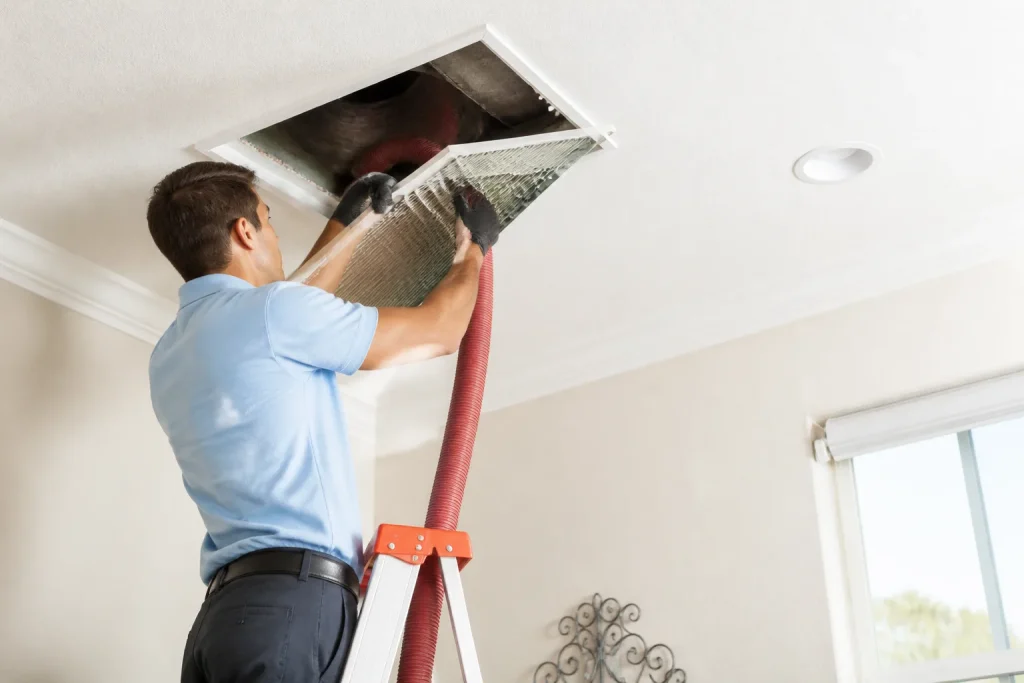
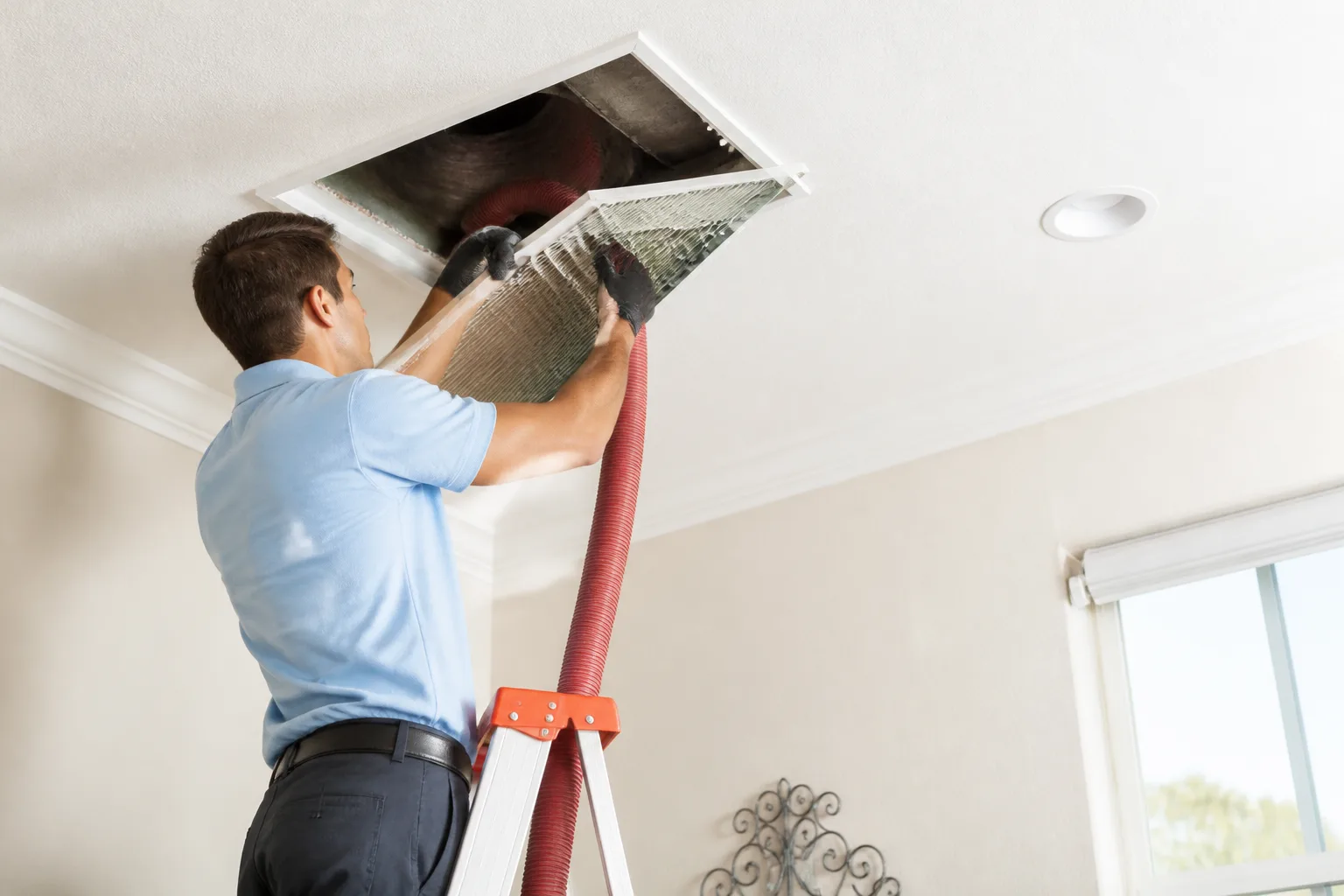
Emergency Air Duct Cleaning Near Me: What Fountain Valley Homeowners Should Do First
If you’ve just found standing water near your air handler or rodent droppings at a register, calling a duct cleaner first is the wrong move. Moisture and active pest situations require containment before any airflow work begins, or you spread the problem to every room in the house. Here’s the correct first-response sequence for Fountain Valley homes, and when a cleaning crew can actually help.
If you’d rather not manage the triage yourself, call (877) 358-4557. We answer 24/7 and can talk you through what you’re seeing. Fast dispatch from 7am to 7pm, Sunday through Friday.
Step One: Identify What Kind of Emergency You Actually Have
The phrase “emergency air duct cleaning” gets searched a lot in Fountain Valley, but most situations aren’t cleaning emergencies at all. They’re contamination events. And the first response differs depending on what you’re dealing with. Figure out which category you’re in before you call anyone.
In our experience, Fountain Valley homeowners usually face one of four scenarios:
- Water intrusion: a supply line leak, a condensate drain backup, or a spill near a return vent. Standing water anywhere near ductwork means shut the system off immediately. Running air through wet ducts spreads moisture into every room and creates conditions for microbial growth within 48 hours.
- Pest activity: droppings at a register, scratching sounds in the ceiling chase, or a dead rodent odor that comes and goes with the blower. This is a containment problem first. Do not run the system. You’ll aerosolize whatever is in there.
- Smoke or fire residue: from a kitchen fire, a neighboring unit fire, or wildfire smoke that got pulled into the return. This is a heavy particulate situation that requires source removal before standard cleaning makes sense.
- Severe dust or debris: a renovation just finished, or someone used the system during drywall sanding. This is the closest thing to a standard cleaning situation, but the filtration may need attention first.
Each of these has a different protocol. A generalist HVAC company may treat them all the same. A specialist working only on duct systems will ask different questions from the first call.
Step Two: When to Shut the System Off, and When to Run It Briefly
Water and pest situations call for an immediate shutdown. No exceptions. Turn the thermostat to “off” and switch the fan from “auto” to “off” at the thermostat. If your air handler has a service switch, flip it too. You want zero airflow through those ducts until someone has assessed the scope.
But there’s one scenario where running the system briefly helps: source identification. If you smell something musty or acrid but can’t tell where it’s coming from, turn the fan on for three to five minutes and walk the house. A register smell that appears only in one room points to a localized issue. A smell at every register means the contamination is at the air handler or in the main trunk line. That distinction changes the cleaning plan, and it’s worth documenting before you shut everything down.
Fountain Valley homes built in the 1970s and 1980s often have duct runs that cross through attic spaces above bedrooms. Those long flex runs hold more particulate than short rigid runs, and they’re where a localized odor can linger unnoticed. Knowing your home’s age and layout helps any technician you call.
Step Three: Document Everything Before Anyone Arrives
This step gets skipped constantly, and it matters for two reasons: it determines the scope of the cleaning, and it’s relevant if you end up filing an insurance claim for water or fire damage.
Take photos of:
- Any standing water, staining, or warped drywall near the air handler or registers.
- Droppings, nesting material, or chew marks at grilles or in the return plenum.
- Soot streaks around register covers or the furnace cabinet.
- The filter, pulled out and photographed from both sides.
Write down the timeline: when you first noticed the odor or moisture, whether it’s gotten worse, and whether anyone in the house has had new allergy symptoms or headaches. That last detail isn’t something a cleaning company can diagnose, but it tells the technician whether you’re dealing with active contamination or accumulated dust.
In our experience as a Fountain Valley duct specialist, the homes where homeowners document thoroughly get more accurate estimates and faster resolution. The technician isn’t guessing at what happened before they arrived.
Step Four: Know the Difference Between a Duct Cleaner and a Remediation Company
This is where people lose money and time. Duct cleaning and remediation are not the same service, and no honest duct cleaning company will claim otherwise.
A duct cleaning company removes built-up dust, debris, and light biological material from duct interiors using vacuum extraction combined with agitation. The tools are designed for particulate removal: Rotobrush and Nikro systems are built around this exact task, pulling negative pressure through the system while agitating the duct walls.
A remediation company handles active water damage, sewage, and confirmed hazardous materials. They use containment barriers, negative air machines, and sometimes demolition. If you have standing water inside ducts or confirmed pest nesting, remediation comes first. Cleaning comes after.
Some Fountain Valley situations need both, in sequence. A supply line leak that soaked the return air chamber may require water extraction and drying before any cleaning equipment can do useful work. A pest infestation that left droppings throughout the main trunk needs removal and sanitizing before mechanical cleaning resumes.
Ask any company you call what they’d do before they arrive. If they can’t explain the difference between cleaning and remediation, keep dialing.
Step Five: What “Emergency Response” Actually Means in Duct Cleaning
No one runs duct cleaning trucks at midnight. The equipment isn’t suited to it, the work requires access to the home’s interior, and the quality suffers when rushed. When a company advertises emergency duct cleaning, what they usually mean is that the phone is answered and the situation gets triaged quickly.
We answer 24/7. Fast dispatch from 7am to 7pm, Sunday through Friday. A call at 2am about a water leak gets the same triage as a call at 10am: we walk through what you’re seeing, tell you whether to shut the system down, and book the earliest available opening. We’re closed Saturday, so a call that day gets booked into Sunday’s schedule.
In the interim, there are things you can do to protect air quality without touching the ducts themselves:
- Keep the system off until a professional assesses it.
- Seal off the affected room if you can, closing doors and stuffing a towel under the gap.
- Run a standalone HEPA air purifier in the affected area if you own one. It won’t fix the ducts, but it reduces airborne particulate while you wait.
- Replace the HVAC filter with a high-MERV filter only if you know your system can handle the added static pressure. If unsure, leave the filter until the technician sees it.
Why Depth of Specialization Matters in a Contamination Event
When the air system is the problem, hiring a company that works on air systems all day, every day, changes the quality of the response. A generalist contractor who installs furnaces and water heaters may clean ducts occasionally. The equipment they use and the questions they ask reflect that.
Our entire focus is air duct systems. That means the techs running the Rotobrush and Nikro extraction equipment have spent 13 years working only on ducts, dryer vents, and the repair work those systems need. That depth shows up in unusual situations – the Fountain Valley homeowner whose return air chamber has a collapsed section, the dryer vent that’s crimped behind the wall, the duct run that was never properly sealed at the plenum. The cleaning schedule may be simple, but the system around it often isn’t.
Being trained across major air quality and HVAC brands like Honeywell and Aprilaire means we’re not confused by the equipment already in the home. A newer Aprilaire filter cabinet doesn’t slow us down. A Honeywell electronic air cleaner wired into the blower circuit is something we work with regularly, not something we pause to Google.
When to Call a Pro
If you’ve confirmed water or pest contamination, or if the dust is bad enough that you can see it on register covers after a renovation, stop troubleshooting and call. The longer a moisture situation sits, the more likely the duct interiors will need repair or replacement rather than cleaning. The earlier a pest situation is caught, the less droppings and nesting material there is to remove.
Related services in Fountain Valley: air duct cleaning and dryer vent cleaning cover most post-event and maintenance scenarios. If duct damage is found during cleaning, repair work gets scoped separately.
The Bottom Line
Most “emergency” duct cleaning calls in Fountain Valley start as something else: a moisture event, a pest discovery, or a smoke incident. The right first response is triage, not immediate airflow work. Shut the system down when contamination is confirmed. Document the scene. Know whether you need remediation before cleaning. And understand that true emergency response in this industry means quick assessment and rapid scheduling, not someone running extraction equipment at midnight.
If you’re in Fountain Valley and need help determining what you’re dealing with, Wellington Air Duct Cleaning offers free estimates. Call (877) 358-4557. We answer 24/7 and fast dispatch runs from 7am to 7pm, Sunday through Friday. We’ll walk through what you’re seeing and tell you whether cleaning, repair, or a remediation referral is the right next step.
Frequently Asked Questions
We answer 24/7. A call outside dispatch hours is booked into the next opening, Sunday through Friday, 7am to 7pm. If the situation is an active water leak or pest contamination, we’ll tell you what to do immediately: shut the system off and isolate the area. Same-day service is often available for calls received early in the day.
No. A musty odor typically indicates moisture where it shouldn’t be. Running the blower spreads whatever is causing the odor through every register in the house. Shut the system off, note which rooms had the strongest smell, and call for an assessment.
That depends on the event type. Water damage from a burst supply line or fire damage from a kitchen incident may be covered. Accumulated dust, renovation debris, and general neglect aren’t. Documentation matters: photos, timelines, and the condition of the filter all support a claim. We can work with your insurer if the situation involves covered damage.
Cleaning removes built-up particulate from duct interiors. Repair addresses physical damage: crushed flex runs, disconnected sections, rusted plenum joints, or poorly sealed connections. We do both, because a duct system with a collapsed section can’t be cleaned effectively until the repair restores proper airflow.
Written by the team at Wellington Air Duct Cleaning, serving Fountain Valley since 2013.
Need Air Duct Cleaning Help?
Call Wellington Air Duct Cleaning - licensed & insured, with free written estimates in Fountain Valley.
(877) 358-4557